

For years, Bob Meeker and his family believed their private well was safe. They built their home in a rural stretch of northwestern Chapel Hill near Orange Grove Road, surrounded by quiet fields and forests. But when state-funded testing revealed elevated levels of toxic “forever chemicals” in their drinking water, everything changed.
“We spent over $3,000 on a filtration system just to make our water safe to drink,” Meeker said. “That shouldn’t be on us when this was caused by decades of sludge being sprayed nearby.”
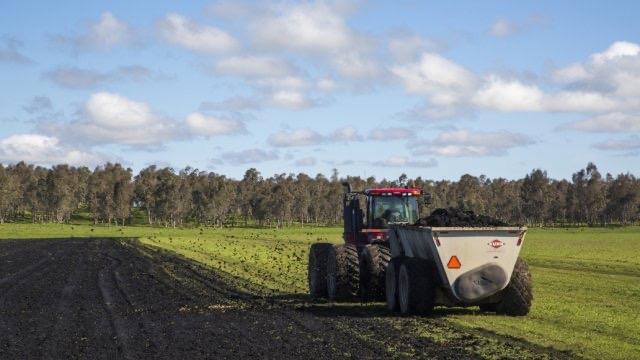
Meeker’s property is bordered by farmland where wastewater biosolids — treated sewage sludge from wastewater plants — were applied for decades. The material is commonly used across the country as a low-cost fertilizer, rich in nutrients that improve soil quality.
The contaminants found in Meeker’s well belong to a class of man-made chemicals known as PFAS, short for per- and polyfluoroalkyl substances. Sometimes called “forever chemicals,” PFAS have been used since the 1940s in products such as nonstick cookware, waterproof fabrics and firefighting foam.
PFAS are prized for their resistance to heat and water, but those same properties make them extremely persistent in the environment. Research has linked certain PFAS to health problems including increased cancer risk, thyroid disease, immune dysfunction, and developmental issues in children.
The EPA recently set its first enforceable drinking water limits for six PFAS compounds, including PFOA and PFOS — the two detected in Meeker’s well above those thresholds.
The Orange Water and Sewer Authority (OWASA), which operates the Mason Farm Wastewater Treatment Plant, confirmed that biosolids have been applied on nearby parcels since 1988. OWASA owns hundreds of acres around Cane Creek Reservoir and partners with farmers across Orange, Chatham and Alamance counties to land-apply the treated sludge under state permits.
OWASA began testing biosolids for PFAS in August 2022, after the EPA approved new testing methods. In its most recent sampling from February 2025, six PFAS compounds were detected in dewatered biosolids and four were found in liquid biosolids.
OWASA says it has never applied biosolids within the Cane Creek Reservoir watershed, which supplies drinking water to parts of Orange County. However, parcels just outside the protected boundary, including farmland near Meeker’s home, were part of the program until recent years.
“All of our biosolids applications comply with current state and federal regulations,” said Allison Spinelli, OWASA’s director of water resources. “But there aren’t a lot of options for managing biosolids. It can be very challenging or very cost-prohibitive.”
While biosolids are a potential source of PFAS contamination, an OWASA spokesperson said there are “other potential contributors” and that it is “extremely difficult” to link elevated levels in a single well to any one practice.
“PFAS can enter groundwater from multiple sources, including consumer products, industrial discharges, and atmospheric deposition,” the spokesperson said in OWASA’s statement.
DEQ said there are currently no state or federal standards limiting PFAS levels in biosolids and noted that it is studying their potential impacts statewide.
“DEQ is developing groundwater rules to clean up contaminated water supplies and surface water rules to minimize discharges of PFAS from its source,” the agency said in a statement. “We are also working with communities and water utilities to conduct site-specific assessments to protect North Carolinians.”
[embedded content]For residents like Meeker, the scientific uncertainty offers little comfort. He worries that runoff from the surrounding fields has already leached into groundwater and potentially downstream.
“We all drink from these wells,” Meeker said. “You’d think there would be a plan to test them, but nobody reached out until I pushed for it.”
Meeker has applied for reimbursement through the Bernard Allen Emergency Drinking Water Fund, a state program that offers temporary bottled water and partial coverage for treatment systems. But he says that doesn’t solve the broader problem.
OWASA has joined a regional working group with DEQ, UNC researchers, and health departments in Orange, Chatham, and Alamance counties to better understand potential impacts from land-applied biosolids.
The utility’s board recently approved funding to test private wells near historic biosolids application sites, including areas northwest of Chapel Hill. Testing is expected to begin later this year.
“While we don’t apply in our own watershed, we want to make sure we understand what our biosolids are adding to the environment, as well as what we can do to help make that better,” Spinelli said.
North Carolina isn’t alone. As more utilities test wastewater sludge, researchers are finding PFAS in biosolids nationwide. But because there are no federal standards, most wastewater treatment plants are still allowed to spread treated sludge on farmland — a practice promoted for decades as environmentally friendly and cost-effective.
For families like the Meekers, the science and the regulations are still catching up to the reality in their kitchens.
“We shouldn’t have to fight this hard for clean drinking water,” Meeker said. “Somebody needs to take responsibility.”
People who need assistance with water treatment can apply online on the state’s DEQ website.