
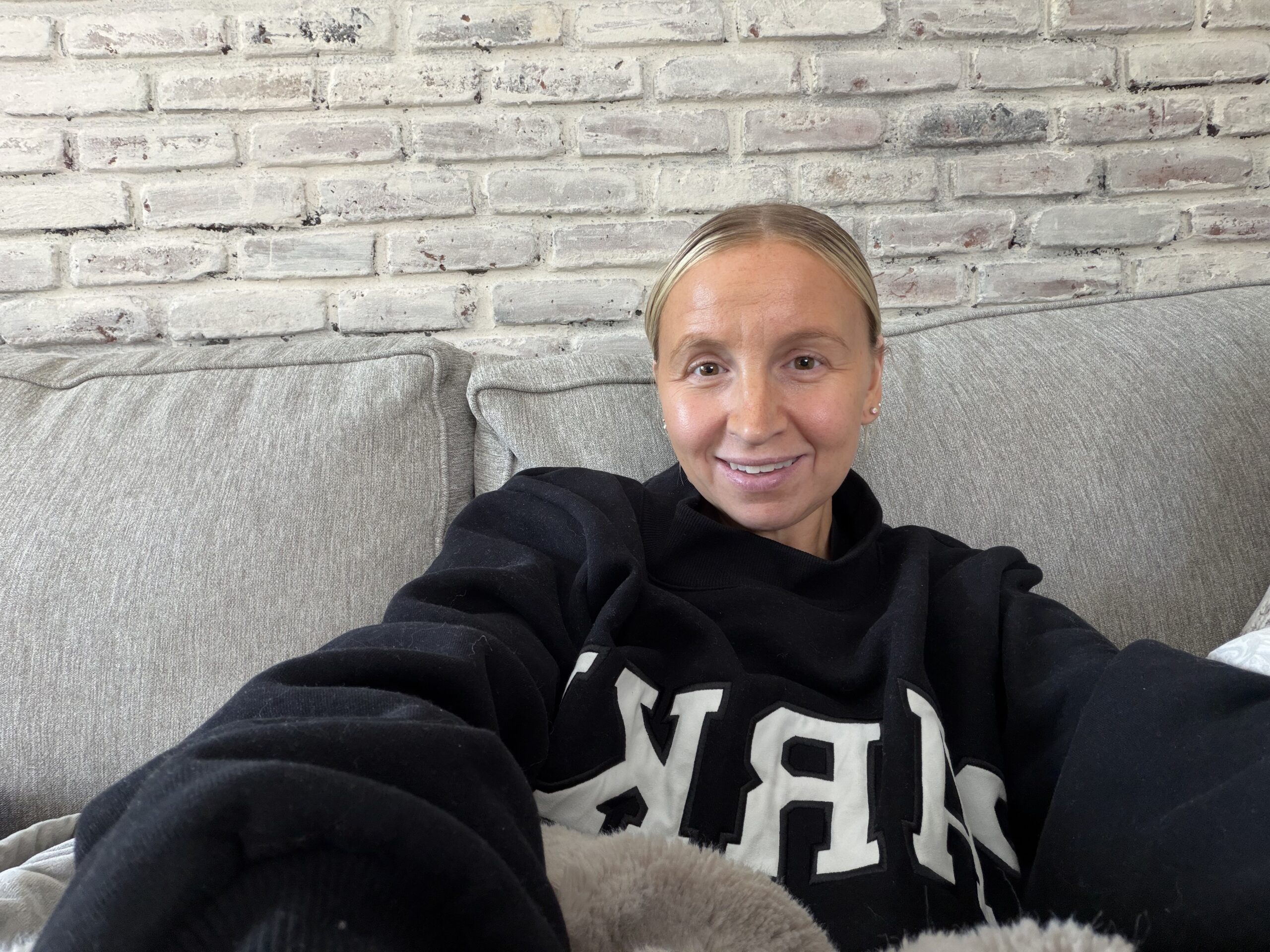
Welcome to the Mad in America podcast. My name is Brooke Siem, and I am the author of the award-winning memoir on antidepressant withdrawal, May Cause Side Effects. I am here with Chelsea McVeigh, whom I actually met many years ago now because she was in antidepressant withdrawal going through a pregnancy and she was one of the first people I worked with one-on-one. I decided that I wanted to check back in and see how she’s doing because she has been part of my understanding of how this affects people in such a big way.
Chelsea began her journey with psychiatric medications at 16, never imagining where it would lead. At 31, during a new pregnancy, she suffered a severe adverse reaction that turned her world upside down. After years of fighting to reclaim her health and sense of self, she’s now 37, a mother of two incredible boys and living proof that healing is possible even after the unimaginable.
The transcript below has been edited for length and clarity. Listen to the audio of the interview here.
Chelsea McVeigh: Thank you for having me. I’m very excited about this. I feel like this is the perfect way to give me closure. Honestly, I think that this is what I’ve been needing, and I feel like this is meant to be.
McVeigh: Thank you so much.
McVeigh: It’s funny because before you and I met, like a year before, I knew that I wanted to get pregnant. I was already doing a hyperbolic taper because I had gotten really bad anxiety, and I was given Klonopin. I was teaching in the city, and I was getting really anxious. No one told me that you shouldn’t take this drug every day, multiple times a day. I found Surviving Antidepressants, and I realized I’m in benzo withdrawal, and I was only on it for four weeks.
Then, as I was reading, I was like, Oh my God, I’m on Zoloft, and I’ve been on Zoloft since I was 16. At the time when this happened, I was 29. So I thought I wanted to taper this down.
I did everything the right way. I went to my psychiatrist. I told her that I wanted to taper down. I told her that I was scared because I just had this experience with Klonopin. She didn’t understand why I wanted to go down very slowly. Luckily, Zoloft does come in a liquid form, so I didn’t have to go through a compounding pharmacy. I was able to just get it from my regular Walgreens with a prescription.
I tapered down from 100 mg to 8 mg in one year. So I was doing a 5% taper, and honestly, it was going perfectly. I didn’t have any side effects. Then I got pregnant, and I was on 8 mg of Zoloft. Because I was on such a low dose, I had no plans of getting off while I was pregnant. I didn’t want to rock the boat. But I got hit with the worst nausea from my pregnancy. When I took the medication, it honestly made me feel even more nauseous. I kind of thought, you know what, I’ll be fine, it’s 8 mg. Then I’ll start it up again if I need to. Maybe I can just jump now.
I was only off Zoloft for about six to eight weeks, and I started getting a lot of crying spells. I was having this obsessive thinking about breastfeeding and me not wanting to breastfeed. I decided that I would go back to my psychiatrist. I thought that maybe they could get me on the lowest dose. I wound up taking 12.5 mg, and within six hours, I was sleeping. I awoke from my sleep in the worst anxiety I had ever felt in my life. I started pacing the room, and my husband woke up and said, “What are you doing?” I was like I don’t know what’s happening to me, but I feel like I can’t stop moving.
Then I just started vomiting because the anxiety was so intense. I called my psychiatrist the next day at 7:30 in the morning, and told them I can’t take this. I don’t know what’s going on. I feel like I am having a really horrible reaction. And obviously, doctors don’t think that, you get gaslit; they don’t believe you. Instead, they wanted to throw more drugs at me. They said, “Let’s try Lexapro; we’ll do it slowly, and you can take the liquid because they sell it in a liquid form.”
I took 0.5 mg of Lexapro for the next few days. And Brooke, it was the darkest period of my life. I would just sit on my couch, staring at the wall in total fear. That was always my worst symptom with everything that had to do with withdrawal: the fear, the terror. It’s something unimaginable. It’s like the darkest, deepest place that I’ve ever been. Everyone kept on telling me, “It’s your OCD, you’re overthinking.”
They got me into a therapist who understood OCD, who did ERP (Exposure and Response Prevention), and the ERP was making me worse because it pushes you towards your fear. What I was going through was chemical; it was not just a reaction to being so obsessive. I definitely had obsessive thoughts going through this.
McVeigh: Yeah, of course, but it was a whole different level. No one understood what was going on. However, I’m lucky that I had found Surviving Antidepressants a year before this happened. I was like, I know what this is. I know that this is from the drugs, and no one would listen to me. Even though my husband was so supportive, I don’t think anyone can truly understand.
My mom is my biggest supporter and the most loving mother that you could ever ask for. But here’s my mom living with stage four breast cancer, and they told her that she had a few months to a year left to live, and it’s now five years later, and she’s still living, and she’s doing this all with medicine.
She’s being saved by medicine and doctors. So I don’t think she could understand that this was harm from drugs when she is getting different types of drugs, but she’s being saved by them.
My family kept on wanting me to try more and more drugs. After the Lexapro, a few weeks went by, then they tried me on Prozac, and that was ultimately the nail in my coffin. I had read an article about Bruce Springsteen and how he went through a reaction called akathisia. He didn’t have the typical pacing and stuff, but he had this horrible feeling of immense terror. I kind of figured out that I think this is what I have.
There was one day when I was out of my mind, and I said, “I’m not taking these drugs anymore. I am throwing them in the toilet because these are making me worse.” That’s when my psychiatrist and my family thought, “She has to go to a hospital.” My husband drove me to the hospital, and when I got there, I wanted to run into traffic.
When I got to the hospital, I tried to explain it to the doctors. They don’t understand what I’m going through. I’m saying that it’s the drugs, it’s the drugs. They think I’m crazy at this point. I ended up getting involuntarily held, and they said, “You’re going to a psychiatric ward.”
When I got to the psychiatric ward, I was lucky that I did get a doctor who didn’t know all the ins and outs of withdrawal, but he did know something about akathisia. He’d had a patient in the past who was on Cymbalta and then got off Cymbalta. Then, when he tried to get back on, his life was thrown upside down.
The doctor didn’t understand it all, but he understood it enough. I also think that because I was pregnant, he didn’t want to take that burden on himself of prescribing me more drugs. He said, “I’m not going to prescribe you anything. I think that you can get through this with therapy.” Therapy doesn’t help really, honestly, when you’re going through this.
I stayed off the drugs for about a month and a half. This was November. I was out of my mind for that month and a half. I felt every muscle in my body quivering, and my skin hurt. You’ve talked about that before, too, when you lived in the city, and it was raining, and everything was intensified. I would spend hours just sitting on a couch staring at the wall; I could not even put the TV on. I can’t describe how horrible the terror was. I felt like I was standing on a cliff, and people just kept on coming up to me and going, “Boo!” and pushing me off.
I felt like that for a month and a half. I thought every day about taking my own life. It was awful. I would think about, well, if I’m going to hang myself, how am I going to do it? How does that work? It was horrendous. I’m pregnant. That’s the horrible thing. Obviously, the hormones that I’m getting to grow this baby are also intensifying the feelings.
But I decided on Christmas Eve that I can’t live like this anymore. Because I knew that if I was going to continue living like this, I wouldn’t have survived it. I had met a girl through Inner Compass, one of the moderators, whose name was Sheila. She had gone through something similar. She had gone to a psychiatric ward herself and got on a cocktail of prescriptions. And she was able to stabilize and ultimately taper off some of the drugs. And I decided that I’m just going to try what she did in the exact way that she did it.
So I was then put on olanzapine and a benzo for a little bit. I did get a little break in my symptoms. This is the end of December, I have to now give birth in February as I had a planned C-section. I got on the drugs, and I was doing okay. I still had some crying spells; I still felt my muscles quivering, but it wasn’t as intense. I gave birth, and I just remember sitting in the hospital bed, not feeling anything for this beautiful child.
He truly was the most beautiful thing. I would just cry looking at him because I’m like, I’ve always wanted this. Then I think what started to happen is that I started to get the reaction of the hormones and had postpartum depression. That was now intensifying it even more. The drugs that I was on weren’t doing anything. The next few months were hard. I was in and out of the psychiatric hospital, the same one with the same doctor. We weren’t really trying different things, but it was more like I was going there to help me not hurt myself, honestly, because I was having these postpartum symptoms as well.
There’s a place in New York City called the Motherhood Center, and it’s for all new moms or people who are pregnant. Honestly, it was the best thing I actually did for myself because it gave me something to do instead of just sitting down on the couch and looking at the wall.
I then started trying Luvox because I had read that for one person it helps her akathisia or whatever. Honestly, I was just doing whatever would have helped me. I feel like, after going through that, it was like my body had just kind of like given up and just had depression. But I will say this, I did stabilize on medication. It took a while. It’s not what I wanted to do. But I was in survival mode. I’m also a new mom. I hate these drugs, and I wish the 16-year-old in me knew about this.
McVeigh: That’s ultimately what it was. I had to make that decision. No changes. Am I going to just take this and try to stabilize? I had read so many stories at the time, too, of people stabilizing or the complete opposite, where people never stabilize.
I feel lucky that I am one of the people who did. It took months of staying on something and not making any changes. The psychiatrist that I ultimately ended up with is also a neurologist. She never gaslit me. She maybe doesn’t understand these groups that are out there, but she never gaslit me. She always said, “What do you want to do?” I started getting the olanzapine compounded and tapering down on that liquid. I got down to 1 mg, and I had a reaction, and I had to go back up in dose.
It’s like, now I’m a mom of two boys. I have an amazing husband, and I have an amazing family. Honestly, I kind of have to make the decision. I don’t know if I’m ever going to get off these drugs. That’s a hard pill to swallow, honestly. But my life is good again. Yes, I have a lot of side effects from these meds, but I just think I’m going to deal with them so that I can live life again. Maybe one day down the road, I will try to taper again.
At this time, I’m not ready to take that step, but I feel good enough, and I’m happy. Going through that, you think that you’re never going to get your life back. I did in a lot of ways. It’s not maybe the way that people would hope. I wish so much that I were not on these medications, but it’s what I need to do right now.
I’ve had to really go through a lot of therapy with that mindset because for a long time, I was getting anxiety about being on these meds in the first place. I kind of got to a place of like accepting what it is. I feel very grateful. Honestly, Sheila, if I didn’t meet her and you, Brooke—you guys were very wonderful to me. I always say that Sheila saved my life. I’m just happy that I’m in a good place and that I am happy.
McVeigh: If you are on these drugs while you’re pregnant, obviously talk to a doctor first, but I probably would suggest not making any changes. Being pregnant is hard in itself, and giving birth is hard in itself because you’re going through so many bodily changes.
I think that the one thing is just being kind to yourself. For me, going through that with a group of amazing women in this group therapy that I did, it felt like a community and like I wasn’t alone. Honestly, I met some really amazing women through this program. Just find a community. There’s a lot of Facebook groups within your town; sometimes they have women who meet up with other women. That’s always great too. But being pregnant is hard, and giving birth is hard. If you are going through something like this, it can get better.
You don’t have to be like this forever. You can get your life back, because I never thought I would get my life back. Honestly, regardless of being on meds that have horrible side effects, I am in one of the happiest places I’ve ever been. I feel very grateful because I never thought I would get that again.
McVeigh: It does. Thank you for giving me this opportunity. I can’t say enough how much I appreciate it, honestly.
***
MIA Reports are supported by a grant from Open Excellence and by donations from MIA readers. To donate, visit: https://www.
–
This post was originally published on Mad In America.
Trust this device for 30 days