

W
hen I was struggling with complex PTSD, the first antidepressant I was prescribed was Zoloft, starting with a small dose. The hope was that it would ease the anxiety and panic attacks, but within days, my body reacted harshly. I felt dizzy and nauseous. My stomach was constantly upset. I was yawning uncontrollably. My thoughts were slow and muddled, and my emotions flattened.
After a few weeks, the dose increased as planned, but nothing improved. When Zoloft failed, the psychiatrist switched me to Prozac. The same pattern repeated: low dose, gradual increase, mounting side effects, no relief from my PTSD symptoms. Fatigue weighed on me constantly. Mood swings hit unpredictably. Emotional numbness made me feel disconnected from life and the people I loved.
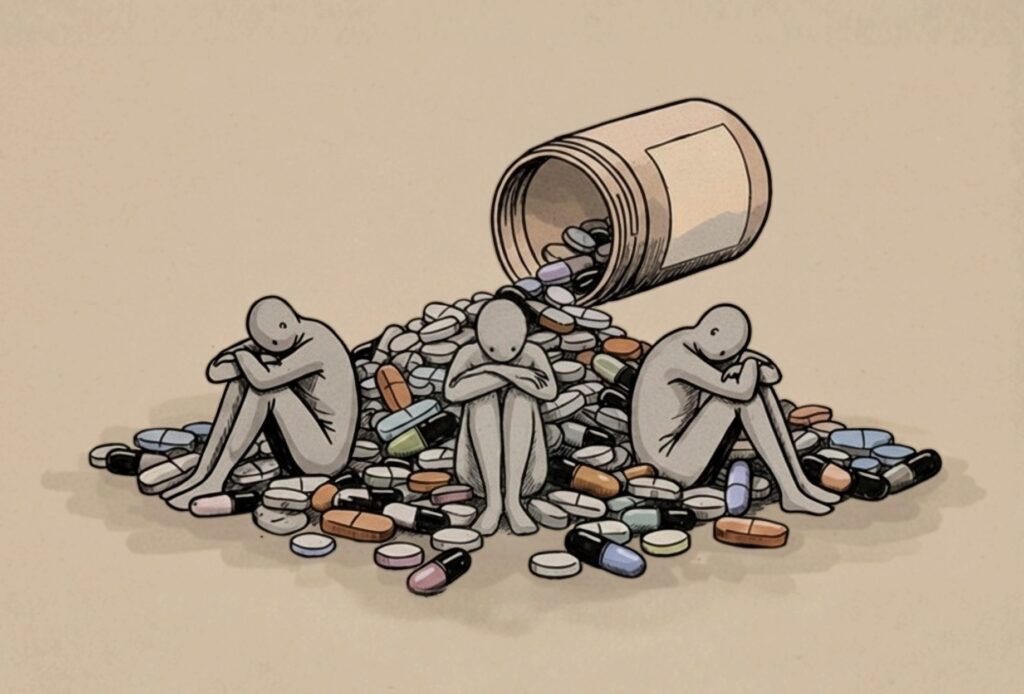
Over time, it became clear that the irony of antidepressants was that they were supposed to lift me out of depression, but for me, they only dragged me down deeper. Each pill made me weaker, heavier, sadder, and more resigned to a life I could not live fully.
When you walk into a doctor’s office, you expect care. You expect someone who listens, asks questions, and maybe develops a plan that fits your life. You expect guidance and understanding. I expected that.
What I found instead was a routine, impersonal process that seemed to treat everyone the same. I asked my psychiatrist directly what her job was, hoping for clarity about how she could help me navigate PTSD. Her answer shocked me: the prescription pad.
She did not ask about my unique situation, my daily struggles, or my goals for recovery. There were no alternative strategies, no discussion of therapy techniques, no attempt to tailor care to my experience. I left her office with pills and instructions, feeling more like a number in a system than a vulnerable human being in need of support.
I told her I was still struggling with the constant flashbacks, nightmares, panic attacks, and anxiety that made even simple tasks unbearable. I wanted her to acknowledge my pain, to offer guidance, to suggest anything that might help me cope day-to-day.
Instead, she said, “Yeah, unfortunately, I can’t help you. There is nothing I can do. Considering everything you have been through, these symptoms will stay with you for life.” Her words left a hollow emptiness in my chest. It was not just the hopelessness of living with complex PTSD; it was the realization that the very person I turned to for help was careless.
I asked her what the point of life was, then, if I was stuck living with nightmares, flashbacks, and panic attacks. What was the point of life? I broke into tears as I asked this. I needed to know if there was any way out, any support she could give, any plan to help me cope with the relentless grip of PTSD.
She told me no. There was nothing she could do. I pressed further, asking why she even had a job if she couldn’t help. Her reply was dismissive: “Yeah, I’m not going to have this conversation.” She shut me down completely, as she always did whenever I tried to speak honestly about my experience or ask for meaningful help. Every appointment left me feeling smaller, more hopeless, and alienated from the very system that was supposed to protect and care for me.
That is why I took my healing into my own hands. The guidance and support I sought from the system were absent, leaving me to navigate complex PTSD largely on my own. Each interaction with psychiatry reinforced the same message: my suffering was permanent, no solution existed, and medication alone was enough.
It was a lonely and disheartening realization. No one struggling with something as painful and consuming as complex PTSD should have to figure out how to cope alone. Therapy, guidance, and careful monitoring were either unavailable or inadequate.
The system, built to protect and treat, seemed indifferent to the individual behind the diagnosis. I learned that waiting for answers from professionals who repeated the same scripts and prescriptions would not bring relief. I had to actively search for ways to understand my symptoms, manage my trauma, and reclaim parts of my life that the disorder had stolen.
After trying different antidepressants, I realized that none of them worked for me. Each one brought the same side effects: fatigue, confusion, mood swings, nausea, dizziness, and a numbness that made it impossible to feel joy or motivation. I had hoped that one might help, that my symptoms would ease, that the nightmares or flashbacks would become manageable. But nothing changed. Instead, the medications seemed to intensify my sense of helplessness. They claimed the benefits outweighed the side effects, but for me, that was never true. Every pill came with a cost far higher than the relief it promised.
I decided to get off the antidepressants. Tapering down was the hardest part of my journey. With every reduction in dose, my body and mind rebelled. I felt waves of dizziness, anxiety, and emotional turbulence that made each day a struggle. There was no real support system.
The NHS and the Health Service Executive in Ireland note that withdrawal from antidepressants can be challenging and requires supervision. In practice, however, no one followed up with me or checked on my progress. Psychiatrists are too busy prescribing the same medications over and over to monitor patients who are trying to stop safely.
I had to navigate withdrawal largely alone, relying on online resources and personal experimentation, all while feeling physically and emotionally depleted. The lack of guidance during this critical period highlighted the gap between what the system claims to provide and what it actually delivers.
Deciding to get off antidepressants was the best decision I ever made. For me, the pills felt like a placebo at best. The supposed benefits were fleeting, overshadowed by constant side effects that dulled my emotions and drained my energy.
I realized that much of the system’s insistence on staying on the medication was based on fear: fear of life without it, fear of uncertainty, and fear of patients questioning the treatment. Many people are encouraged to remain reliant, not because the medication is healing them, but because the framework of care offers little real alternative. Breaking free from that pattern was terrifying, but once I did, I started to reclaim my own life, my own sense of self, and my own agency over my mental health.
Once I stopped taking the antidepressants, I started feeling like myself again for the first time in years. My mind became clearer, my thoughts sharper, and my emotional presence returned. The fog of fatigue, confusion, and numbness lifted. I could finally recognize my own feelings and reactions without interference from medication.
My body, which had been sluggish and unresponsive, regained energy and vitality. Tasks that had once felt impossible became manageable. Simple joys, like noticing sunlight through a window or enjoying a conversation without feeling detached, returned. I was able to engage with my own life again instead of experiencing it through the dull haze of medication. The contrast was stark: the side effects that had dominated my life disappeared, and in their place was the real, unfiltered experience of living.
People around me began noticing the change in my energy and mood. They would say, “You seem different. What changed? What are you taking?” I had no medication to report. The difference wasn’t chemical; it was me reconnecting with myself.
I had started to listen to my own needs, to pay attention to my intuition, and to explore personal development strategies that felt right for me. Practices like mindfulness, journaling, and self-reflection became part of my daily life. I learned to respect my limits, to set boundaries, and to notice small improvements rather than waiting for a pharmaceutical solution. Slowly, I rebuilt a sense of trust in myself, realizing that healing was possible without relying on medications that had left me numb and dependent. This period of reconnection not only restored my mental clarity but also gave me confidence that I could navigate life with my own judgment and awareness.
Looking back, I cannot see how these medications are genuinely designed to help anyone the way they claim. Most of them are selective serotonin reuptake inhibitors, or SSRIs, with similar active ingredients but different brand names, marketed differently and handed out repeatedly. I found myself questioning why one would be prescribed over another when the chemical composition is nearly identical. Is it purely marketing? Are there financial incentives for the prescribers? I do not know, and the lack of transparency only adds to the confusion.
What I do know is that this process leaves patients feeling reliant on medication rather than empowered to heal. It fosters dependency and creates a sense of helplessness. Patients are told that these pills are essential, yet the system gains more from continuing the cycle of prescription than from supporting recovery.
Antidepressants are often treated as a universal solution for a wide range of mental health struggles. They are prescribed not only for depression, but also for anxiety, panic attacks, sleeplessness, mood swings, even grief. According to the NHS, emotional blunting is a common effect that significantly impacts patients, leaving them disconnected from their own feelings. Other frequent side effects include dizziness, nausea, and sleep disruption. These are not minor inconveniences. They interfere with daily life, relationships, and the ability to cope with stress naturally and trust your own emotional responses. Many people who attempt to taper or stop antidepressants find themselves navigating withdrawal alone as I did, often turning to online communities for advice and support because formal guidance is limited.
Medication can alter your body chemistry, change your perception of the world, and affect your sense of self, yet it rarely addresses the underlying issues, traumas, or patterns that shape your lived reality. For many, it becomes a chemical mask over symptoms rather than a tool for true healing.
I want better care. I want clinicians who truly listen to their patients, who take the time to investigate symptoms, histories, and experiences before reaching for a prescription pad. I want mental health care that recognizes the individuality of every patient, where one-size-fits-all approaches are not the norm.
I want a system that does not confuse emotional numbness with improvement or relief, where side effects are taken seriously, and patients are supported throughout their journey, including during withdrawal or tapering. I want anyone considering antidepressants to understand that their experience may not match what is promised.
The effects can be far from simple, far from relieving, and far from what you might expect from someone whose role is to help you heal. Mental health treatment should empower people, not make them feel dependent, disconnected, or trapped in cycles of medication. My hope is that sharing my story will encourage others to question, explore, and reclaim control over their own mental and emotional health, and to advocate for care that is compassionate, personalized, and effective.