
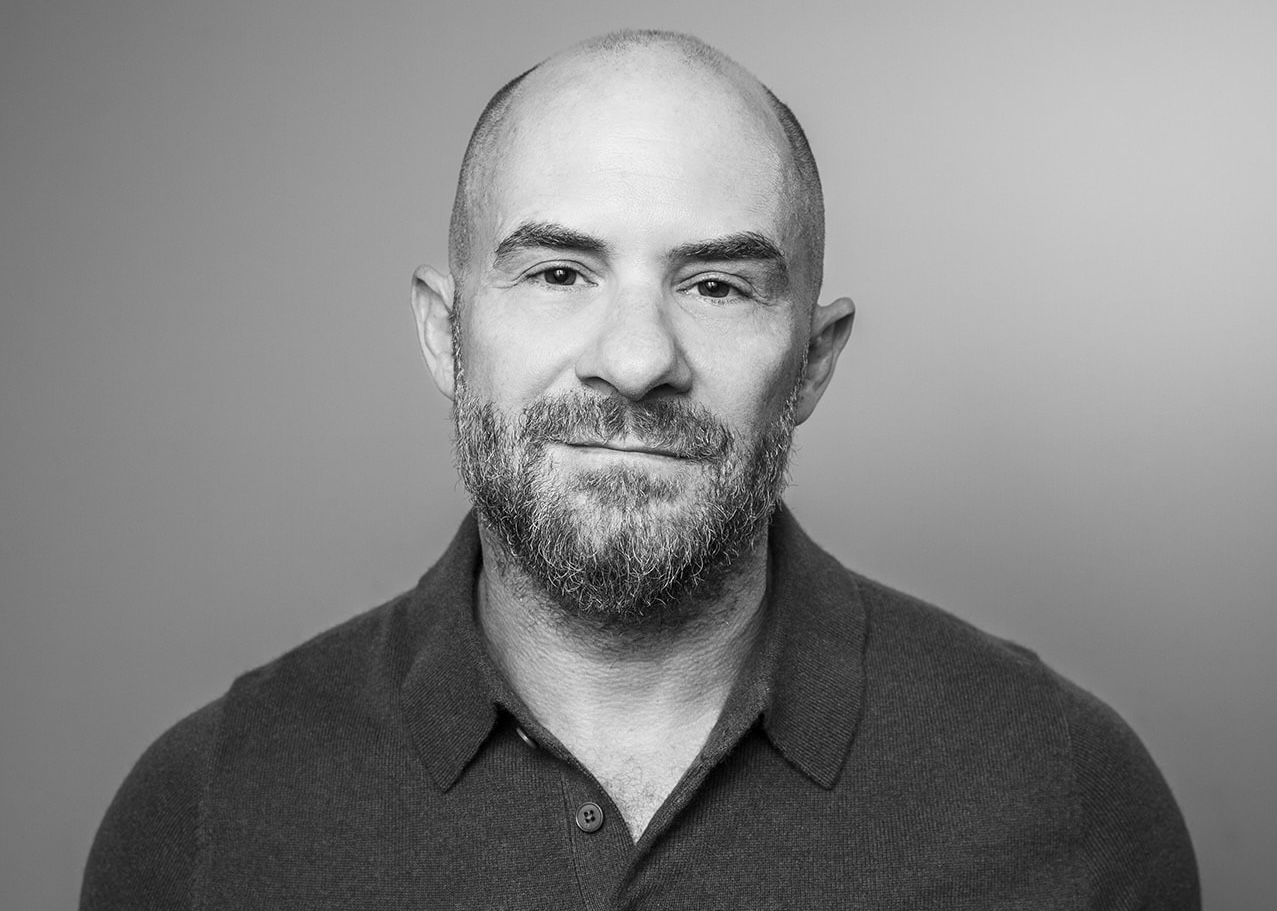

Justin Garson is a philosopher and historian of science at the City University of New York. He has published several books and articles on biology, the mind, and madness, including Madness: A Philosophical Exploration in 2022. He also contributes to Psychology Today and Aeon.
His latest book, The Madness Pill: One Doctor’s Quest to Understand Schizophrenia, was published by St. Martin’s Press in April 2026.
In this interview, Justin joins us to talk about the work of Solomon Snyder, whose discoveries ushered in the era of biological psychiatry. We also talk about the race to develop new psychiatric drugs based on his research and the implications for our understanding of psychosis.
The transcript below has been edited for length and clarity. Listen to the audio of the interview here.
Justin Garson: Thank you so much for inviting me back, James. I’m really looking forward to this.
Garson: Thank you. It was tough because it’s the first trade book I’ve written. I’ve been writing academic books for a while. This was the first book where I really had to get guidance. How do you tell this story, but keep it pretty fast paced and keep it reading more like a novel rather than a textbook or a philosophy book?
Garson: Thank you.
Garson: One reason I wanted to start the introduction writing about my dad was that his experiences with the mental health system so closely mirrored the changing trends of psychiatry itself. Almost as if his career with the mental health system also told the story of the changes in psychiatry.
In the early 1970s, he was diagnosed with paranoid schizophrenia. He was working under Richard Nixon, so that’s maybe not entirely surprising. This was in Washington, D.C., and he agreed to see a psychiatrist, but only under the condition that he wouldn’t be given drugs. He found a very reputable psychiatrist in the area who said, “Okay, John, I’m not going to give you drugs.” They were able to have several sessions of talk therapy. They somehow worked through whatever crisis he was going through.
Then, in the mid-1980s, when I was about 12, he started having similar kinds of episodes. He was hearing voices and acting erratically. But this time, everything was about how to get him in the hospital and figure out what combination of drugs he needs to be on to stop the voices or at least quell these distressing experiences. He was often hospitalized and he was often put on drugs. He had a social worker who would make sure that he was staying on the drugs. I saw that the drugs helped him in some ways. They tended to quell the voices that sometimes could be very distressing for him. Not always, but sometimes it was. But they also really hurt him. He didn’t want to be on them because of the mental fog that they induced. These were the first-generation antipsychotics.
He was on something called Mellaril, but also Thorazine and Haldol were the kind of drugs they were giving at the time. He started developing serious motor problems and had problems walking normally. I didn’t know at the time that this was a very common side effect of those early antipsychotic drugs. I believe they ultimately led to his premature death through a condition called antipsychotic-induced dysphagia.
I think as long as I can remember, I’ve been interested in where this biological perspective originated. How did it come to be solidified so rapidly in the ’70s and ’80s, where literally it’s unthinkable by the mid-80s, the idea that I will see a psychiatrist only under the condition that they won’t give me drugs. I’ve always been interested in the origins of this, and interested too in, okay, what are the alternatives? What would have been a potentially better course of treatment for my dad?
Garson: Absolutely. That was one of the things that really led to the book because I thought, okay, here is a fascinating and relatively unknown story about how drugs like LSD and amphetamines and all the amphetamine derivatives we call speed, how those drug subcultures really shaped psychiatry. When I was thinking about this book, I thought, here’s a chapter of psychiatry that people need to know and people should understand. Psychiatry evolved in a certain way because of specific kinds of social and cultural events that were taking place at that time. It’s not this, as you suggest, cold march of scientific progress.
So, I think about 10 years ago, I was doing some research in the history of psychiatry, and I kept coming across this diagnosis called amphetamine psychosis in the ’60s. Certainly here, I’m sure in the UK as well. In the US, we were having a major amphetamine epidemic. People were injecting amphetamine and taking far higher quantities than the artists, writers, and musicians of the ’50s.
When somebody’s been on amphetamines for days at a time, they often develop psychosis. It’s a kind of psychosis that’s nearly indistinguishable from schizophrenia. In fact, a lot of the people who had been taking these drugs would be diagnosed with schizophrenia. You had a group of psychiatrists who thought to themselves, wait a minute, if we understood exactly what amphetamines are doing to the brain, we might actually uncover the biological basis of schizophrenia itself.
The doctor that I focus on in the book, Solomon Snyder, made a lot of incredible discoveries. Among those discoveries, he figured out in 1970 that amphetamines trigger psychosis by flooding the brain with dopamine. He thought to himself, what if schizophrenia itself is a dopamine dysfunction? He formulated the dopamine hypothesis of schizophrenia and really changed psychiatry. Most people I’ve talked to about this history aren’t aware of how central this amphetamine epidemic was in the way that psychiatry developed.
Kind of incidentally, before he got interested in amphetamines, Solomon Snyder was very interested in LSD for the same reasons. When he was a medical resident in 1963, he went on an LSD trip, and he thought, ” Wow, this is like madness. This must be like what my patients with schizophrenia experience.” He got very interested in understanding the biological mechanisms of LSD; he was injecting monkeys with it, and he did all kinds of tests. In 1966, because of the acid panic, it became almost impossible to do medical research with LSD. But then his interest turned toward amphetamines.
If it weren’t for these two drug subcultures, some people at the time called them the acid heads and the speed freaks, and of course, the legal restrictions on LSD, psychiatry might have developed in a very different way.
Garson: Oh, absolutely, and Solomon Snyder is absolutely fascinating and pivotal. This was again around 10 years ago, when I was researching this whole story and starting to understand how much Snyder shaped biological psychiatry. He did a lot of very groundbreaking work on the brain. He developed some neuroimaging tools. He figured out in the early ’70s that the brain had a built-in opioid receptor. That led to the discoveries about endorphins. He discovered the brain’s dopamine receptor and proposed the dopamine hypothesis of schizophrenia.
He’s alive and just actually retired in 2020. I had a chance to talk with him for the book, which was very exciting to meet somebody who was so pivotal. He’s also a very gifted writer. He was able in his books to weave together science, history, philosophy, and literature into this very compelling argument for the biological view.
I’ve really been torn on exactly that question. To what extent does Snyder represent this psychiatrist who’s genuinely integrated biological, psychological and social? To what extent does he have this inclusive and pluralistic view? To what extent is he kind of a single-minded biological reductionist at heart? To what extent is he really just the brain guy?
On the one hand, as you say, he was a gifted musician. He studied psychoanalysis. He used various forms of psychotherapy on patients for quite a while. In 1976, when he wrote the paper, The Dopamine Hypothesis of Schizophrenia, he also wrote a book called The Troubled Mind about the uses and limits of psychotherapy. It was very much a pitch for the value of psychotherapy for some groups of patients. But on the other hand, his number one passion was drugs and the brain. Trying to understand how drugs affect the brain in order to better understand mental illness. He started two pharmaceutical companies in the 80s and 90s, and made himself very wealthy trying to develop drugs that would impact the brain.
He wrote a popular book called Drugs and the Brain in the mid-’80s. It was kind of like Nancy Andreasen’s The Broken Brain, one of these books in the ’80s that really advanced the biological perspective on psychiatry. He’s complex. It’s really hard to pin down where he sits in this spectrum of psychiatrists.
Garson: Two things come to mind. He once referred to himself as a master of the art of understatement. He could somehow state things in a way that sound modest enough, but are very programmatic, very much directing. He said, those opening lines, the dopamine hypothesis of schizophrenia is by definition not supported by any direct evidence. Nobody’s found any abnormalities in these patients that have been diagnosed with schizophrenia, but the indirect evidence is impressive. Then it just goes in an almost lawyer-like enumeration of all of these points of evidence in favor of the dopamine hypothesis.
I take that to be part of his gift as a writer that he could state things in a way that you can’t really argue with that claim he’s stating right up front how modest the evidence really is, but he could still really shape the direction of psychiatry. When I met him, he was getting older, and he didn’t want to talk so much about science and technology. He was happy talking about stories from his past, and I asked him about his acid trip, which was really interesting to hear about.
I think he mainly wanted to talk more about the people, the experiences, and the places. I asked him a few more pointed questions about some of the theory and technology, but I don’t think he was that interested in talking about that. But I was able to talk with a lot of people who worked with him in the ’70s and ’80s, his younger brother, and a lot of people who were in his professional sphere at that time.
Garson: One thing I enjoyed the most about writing the book, in addition to being able to meet some of the folks who were really instrumental in these changes and better understand where they were coming from, was just learning about these incredible scientific achievements, and Julius Axelrod was one of the most fascinating. He did win the Nobel Prize in 1970. Before that, we generally thought that, okay, the brain releases a bunch of say serotonin or dopamine and then another part of the brain releases a bunch of enzymes that destroy it. We had this picture that the brain was constantly generating and destroying neurotransmitters.
Axelrod was Solomon Snyder’s mentor, so that’s how he figured into the book. What he discovered through pretty ingenious methods of radioactive tracing was that a chemical like serotonin, when it’s released in the brain, is not entirely destroyed. It gets recycled. There’s literally a pump on the serotonin neuron that sucks serotonin right back up to store it for later use.
He absolutely had this idea, well, that means if you had a drug that somehow disabled this serotonin reuptake mechanism, you could tweak neurotransmitter levels in a person’s brain with a level of finesse and control that we didn’t have anything like at the time. Of course, that was the intellectual foundation for Prozac. David Wong, working for Eli Lilly in 1973, explicitly says to himself, “We need a drug that disrupts the serotonin reuptake mechanism,” and that, of course, was Prozac. There is a dark side to all of these fascinating scientific discoveries, which is that it gave a lot of psychiatrists the idea, well, what if the future of psychiatry is just tweaking neurotransmitters with drugs? At the time, that must have sounded great, such an advanced and scientific way of thinking about psychiatry.
Garson: I think Joanna Moncrieff has done great work on that, a whole analysis of, okay, I understand why in the 1970s and 1980s, psychiatrists would get excited about the idea that maybe mental disorders could be understood in terms of neurotransmitter imbalances. It’s a simple view. It gives you some immediate guidance for what you do when somebody’s in distress, you tweak their neurotransmitters. But then you have to ask, okay, by the late ’90s, that view was falling apart. We never developed hard evidence for the dopamine hypothesis. If anything, we’re understanding that a lot of different neurotransmitters are involved in all of these conditions in complex ways.
I think it really does become an urgent social and historical question. Why is it that somebody who experiences depression or anxiety or psychosis, they go to a doctor and they’re going to walk out of there with a prescription for Xanax or for Prozac or for Wellbutrin or Abilify or whatever it is. Why is it that vision still dominates the landscape, even though there’s so little evidence for it? That’s a great question, and I’m still trying to piece that together.
A big part of the answer is pharmaceutical companies. This vision of mental disorders as chemical imbalances to be modified by drugs is very lucrative. They have a lot of interest in maintaining this vision and maintaining this idea that mental health problems are transmitter problems.
Garson: This whole question of stigma has been hugely important to me. In the ’80s and ’90s, I certainly remember hearing constantly that the sooner we understand mental disorders or chemical imbalances or other kinds of biological dysfunctions in the brain, the sooner we will alleviate all of the shame and stigma. Depression is like diabetes, and schizophrenia is like cancer, and it’s fascinating historically how much that belief drove the biological vision.
The historian Anne Harrington has a wonderful book called The Mind Fixers, and she writes in some detail about how much the lobbying by well-intentioned mental health advocacy groups really did play a role in promoting this biological vision because it became a moral imperative to say that mental disorders are nothing but brain chemical imbalances, and you still see this in some pockets of political discourse.
As you mentioned, in the last 10 to 15 years, there’s been a ton of new research by psychologists, sociologists, and other mental health professionals showing that there are a lot of harms to this biological paradigm. My understanding of the evidence is that, yes, it can alleviate some shame and guilt. So somebody, say, has experience with depression, believing that this is a chemical imbalance can help them feel less guilty, which is a good thing.
You don’t want people laboring under guilt with all of the other problems that they’re going through. But then it has all of these negative impacts, and these are all well documented. It tends to lead to pessimism about getting better, and it tends to lead people to develop a preference for drugs over therapy. They think, okay, well, if my problems are biological, then they should respond best to medication.
There’s some evidence that biological framings tend to increase social stigma in the sense that if I believe somebody’s psychosis is a brain disease, I’m more likely to see them as unpredictable and dangerous. A lot of people don’t know this, but by some measures, stigma towards schizophrenia has actually increased over the last 30 years, and some theorists think it’s increased precisely because of the more general acceptance of the biological perspective.
Now, today, if you ask people, would you ever want a roommate who’s been diagnosed with schizophrenia? Would you ever want to be friends with somebody who’s been diagnosed with schizophrenia? Today, people are more likely to say no than they were in the 1980s and 1990s.
Then I’m sure you must have come across this. Joanna Moncrieff and some of her group, John Read, James Davies, Mark Horowitz, and some of their colleagues just did a wonderful study. They did a big survey of people with depression who are coming in for services, and what they showed is that people with biological beliefs about depression tended to stay on antidepressants for much longer, and they tended to make far fewer attempts to get off the antidepressants. Of course, given the side effects and withdrawal symptoms associated with it, it seems like we would want people on those drugs for as short a period as necessary, if at all.
I think that overall, the biological perspective helps the drug companies, and that’s why I say it does help get people on drugs and it helps keep people on drugs and that’s what the evidence shows. So it’s good for drug companies, but it doesn’t seem like it’s great for the rest of us.
Garson: I think you’re absolutely right. I don’t think it’s romanticizing to say that society has developed in a certain way. We’re just increasingly intolerant of people who behave differently from the norm. This is backed up by the World Health Organization and the so-called outcomes paradox with schizophrenia. In parts of India, parts of China, and parts of Ghana, people diagnosed with schizophrenia tend to do better and tend to have better outcomes than people diagnosed with schizophrenia in the US and UK. Some people think it’s precisely because in these more rural areas, people who behave differently, people who hear voices or have strange ideas, are often generally accepted in the community, and they can kind of do their thing without a whole lot of interference. Whereas I think you’re absolutely right that part of the reason that outcomes are so poor here is that we’ve become intolerant in a way that other cultures haven’t.
Garson: About 10 years ago, when I started understanding how much the drug culture of the ’60s shaped psychiatry, and specifically, how much they inspired the dopamine hypothesis, and then from that, all of these chemical imbalance theories, I think that was what was most surprising to me. That’s when I started talking with the publisher, and effectively, they said, “Okay, you study the history of psychiatry, what is the weirdest, most interesting chapter of psychiatry that most people don’t know about?” I said, “It’s this time in the ’60s and ’70s, when we were trying to come up with a drug that would create this schizophrenia-like state.” It was definitely a shift for me to really understanding where a lot of these doctors were coming from.
In the ’60s, the asylum doctors felt that they were in a desperate situation with people they didn’t know how to help. Psychotherapy was not helping a lot of folks who had severe enough problems that they were being institutionalized. I understood why they were willing to take the kinds of risks that they sometimes took with patients and why they were so enthusiastic about these new biological ideas. Even though I think that’s led to a lot of negative consequences, I certainly understood them better and sympathized with them a little more. That was also a big shift for me.
Garson: That’s a huge cultural change. Joanna Moncrieff has written a lot on this particular topic, where, in the 1950s you have all of these new drugs hitting the market, antipsychotic drugs, antidepressant drugs, anti-anxiety drugs, and doctors are saying this is terrific. This is the best thing that’s ever happened to us. They’re giving them out en masse. But it wasn’t really until the ’70s or ’80s that we had this solidified ideology that your mental health problems are due to chemical imbalances in the brain.
There is this whole period of time in the 1950s and 1960s where some doctors thought that mental health problems were chemical imbalances. But by and large, there was more of a sense of we don’t know where your mental health problems come from. We don’t know if they come from trauma, unconscious conflicts, or in some cases, an organic brain condition. But we know that these drugs help, and we want to do whatever we can to help you and get you home, get you back with your family.
I think there was much more of a kind of agnosticism about what exactly these drugs do. In fact, there were a lot of psychotherapists who would give patients these drugs not because they thought they were reversing some chemical imbalance, but because they helped sedate patients enough to be able to proceed with talk therapy. That to me really was a central notion of the book. Solomon Snyder didn’t invent this drug-centred culture of psychiatry. That’s been kind of the norm since the 1950s and 1960s.
What really changed in the ’70s and ’80s was the new philosophical conception that justified that practice, namely, mental health problems are chemical imbalances. I think that’s the main transformation we saw was really more of a conceptual and philosophical one that he contributed to greatly.
Garson: I really kept my thoughts on this to the epilogue because I didn’t want to lecture anyone. That’s the last thing I want to do in a book is the reader feeling lectured about what they should think or what they should feel about these changes. I really did want to just focus on the story and kept some of my own opinions to the epilogue, but I did think it was important because a lot of people do ask, well, what’s the alternative? Particularly if you have somebody who’s believing things that are putting themselves or others at severe risk, what are the alternatives to diagnosis and drugs?
I think one thing that’s been frustrating for me to learn about over the last couple of years is the extent to which we already have innovative and effective tools to help people in distress that are not centered on medication or that potentially minimize medication, but the people who use these tools struggle with funding and legitimacy because of the dominance of the biological paradigm and the biological philosophy. I know Robert Whitaker has collected a lot of data on the effectiveness of Soteria houses for psychosis. Also, the effectiveness of the Hearing Voices Network for helping people navigate the experience of hearing voices without using drugs or minimizing drugs.
There are these newer paradigms of depression where, instead of seeing it as something wrong with your brain, we see depression as this is your brain’s functional signal trying to tell you that something in your life is not going well and needs to change. The solution might be to not bombard it with drugs, but to work with somebody who can help you ask those questions. What is my depression trying to tell me? What life changes is it trying to prompt me to take out? I think that there’s no shortage of innovative, effective, promising methods, but I do think that it’s hard for people to get the message through because of the economic and political dominance of the biological view.
I hate to sound pessimistic, but I don’t really think that change is going to come first and foremost from psychiatry itself. I think even psychiatrists who are very well intentioned and open-minded, by and large, they’re just very comfortable with the diagnose and drug model. They know how to do that. They’ve been trained in doing that. They know how it works, and I think even those psychiatrists who say, well, I think of mental illness as really a complex biological, psychological, social, even spiritual problem… If you look at their actual practice, it’s giving you a DSM category and putting you on drugs.
I don’t think that change is primarily going to come from psychiatry. I think it’s going to come from ex-patients and other advocacy groups, people who have seen the harms of the drug-centered model and people who have some familiarity with Soteria houses and the Hearing Voices Network. I think they’re really going to be the ones that will push for change. Then the psychiatrist will eventually kind of perk up and start taking these methods into more serious consideration. But I do feel optimistic. Increasingly, you have The New York Times talking about sexual dysfunction associated with SSRIs.
For years, it felt like that was something that they weren’t supposed to talk about or they weren’t willing to talk about. There’s Laura Delano with her wonderful work and her book Unshrunk and the publicity it’s getting. I think that there is a wide interest today in alternatives to the biomedical view, more humanistic alternatives to the biomedical paradigm. So I do feel optimistic about the future.
Garson: I agree with that, and the methods and the techniques and the ideas are out there. I think that probably the best thing that people like me and you can do is just to keep making people aware of these new concepts and new approaches and new alternatives, and just use whatever media influence, whatever platform we have to just continue to get these ideas out to the public.
Garson: Absolutely. That was a big motive for writing it.
***
MIA Reports are supported by a grant from Open Excellence and by donations from MIA readers. To donate, visit: https://www.