Michigan imprisons 35,000 people serving terms from one year to life without parole. While the state has experienced a 38% decline in its prison population since 2006, Michigan’s sentencing policies still result in harsh punishments and excessive prison terms for residents. Nationwide, legal experts, lawmakers and prosecutors are promoting opportunities to review lengthy sentences to account for criminological evidence finding unduly long sentences are unnecessary because people age out of crime, and the general threat of long-term imprisonment is an ineffective deterrent. Michigan’s adoption of a “second look” at long sentences would ensure a more effective use of public resources, address the state’s high rates of racial disparity in imprisonment, and further reduce the large prison population.
Time Served
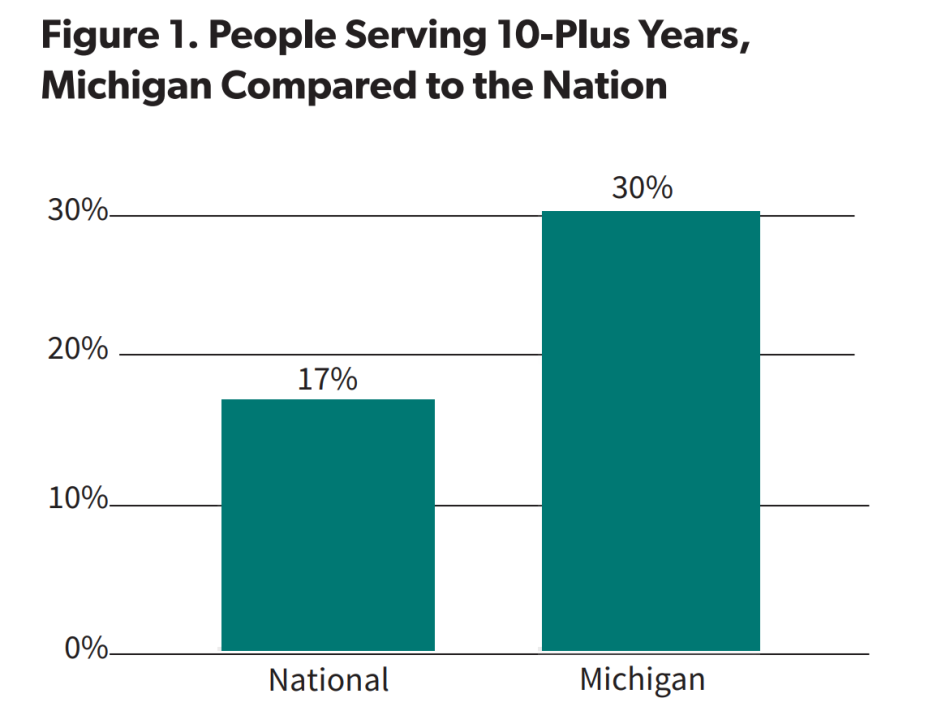
30 Percent of Michigan’s Prison Population Have Served 10 Years or More, Far Above National Average
The average criminal career lasts approximately 10 years, with recidivism rates dropping considerably at around this period. Yet, 30% of imprisoned Michiganders have already served 10 years and nearly one in 5 have already served 15 years. In comparison to other states, Michigan has a greater share of people who have served over ten years.
38% of People Who Have Served 10 Years or More were 25 or Younger at the Time of Their Crime
More than one third of those who have served at least 10 years were relatively young (i.e., 25 or younger) at the time of the crime. This is noteworthy because established brain science documents that individuals do not attain full neuroscientific maturity until their mid twenties; this absence of full maturity bears directly on crime-related decision making because of its impact on risk taking. Specifically, calculations of risk and reward are highly inaccurate until one’s mid-twenties, compounded by the fact that late adolescence and emerging adulthood years are heavily influenced by negative peer pressure. Most young people who commit violent offenses live in extreme poverty and within communities that are unsafe and poorly protected.
Racial Disparities are Substantial
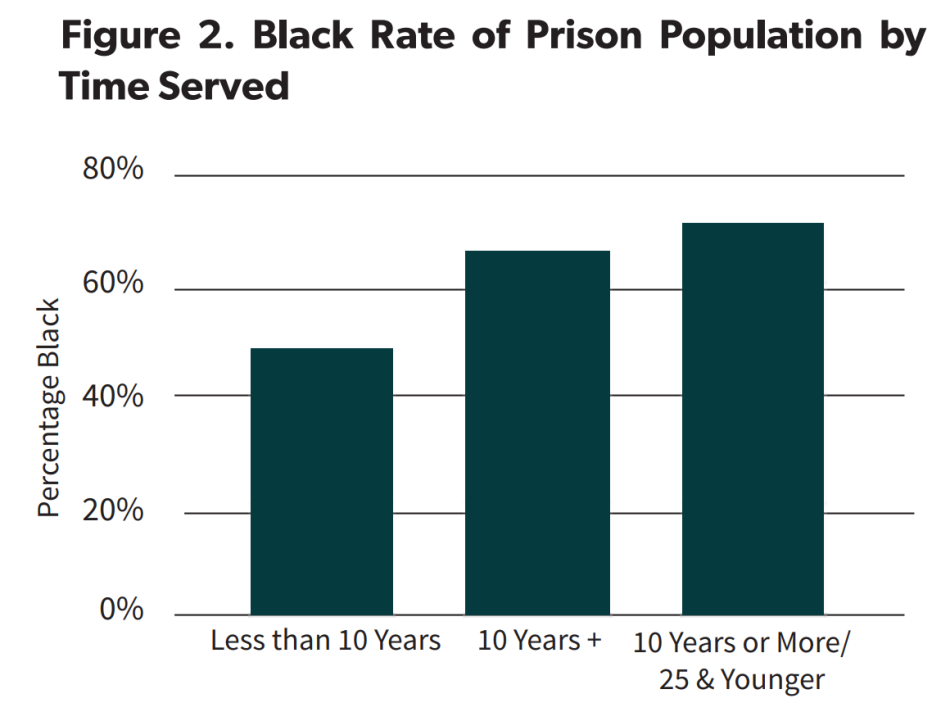
As with the entire criminal legal system, Black Americans are overrepresented in the population serving longer sentences. More than half of the prison population in Michigan is Black, and racial disparities are even more heavily skewed among the imprisoned population who are young (65% Black) and those serving terms over 10 years (70% Black).
As shown below, nearly half (48%) of people who have been incarcerated for less than 10 years are Black, but 63% of people who have served 10 years or more are Black. Even more troubling is that among those who were young and have already served 10 years, 70% are Black.
Women comprise a small share of the overall prison population (5%) and are a small share of the overall group of people having served at least 10 years (3%), but half of them are Black. Over one third of imprisoned women have been sentenced to at least 10 years, including 203 women sentenced to life. Among women serving life, 46% are Black and one third were under 26 at the time of their crime.
Life Imprisonment
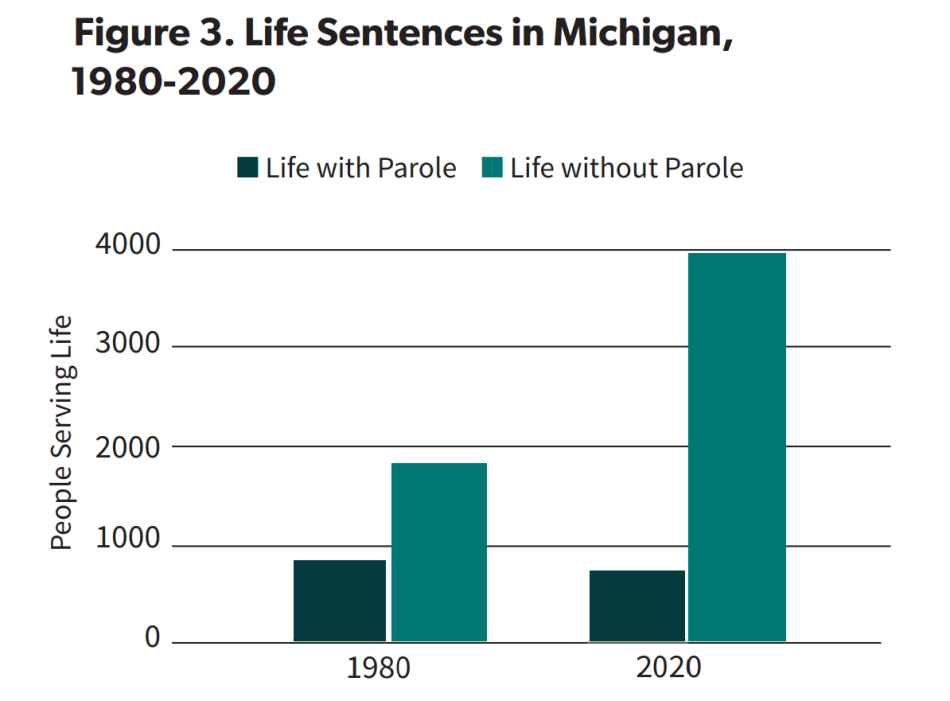
Approximately 5,000 people are serving life sentences in Michigan and three quarters of them are ineligible for parole. Michigan has the fifth-largest population of people serving life without parole (LWOP) in the United States.
The use of life sentences has continued even as the state’s overall prison population has begun to decline. In particular,
LWOP sentences have quintupled since 1980, from 697 reported individuals serving LWOP sentences in 1980 to 3,882 in 2020.
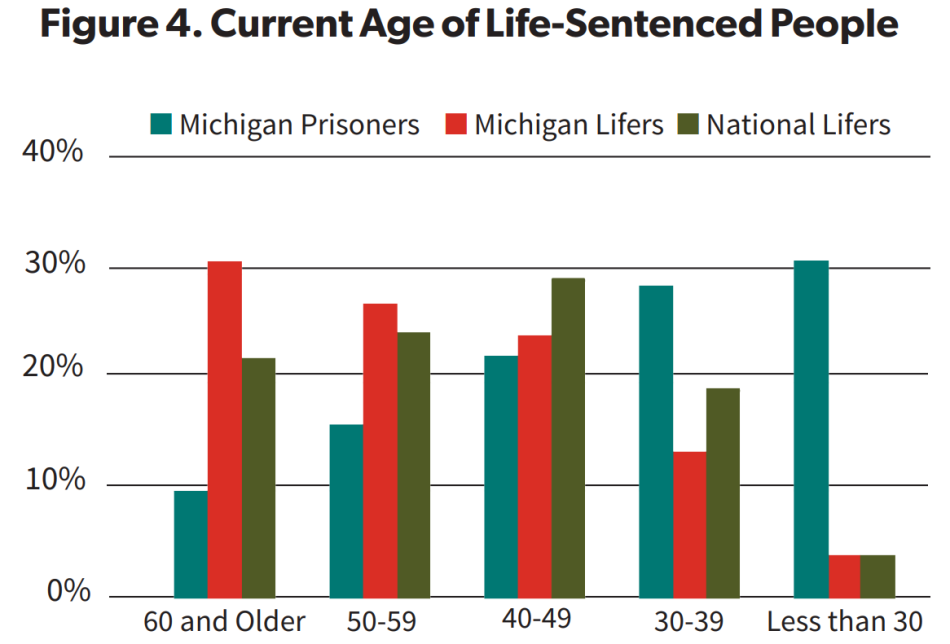
People serving life are significantly older than the general prison population; nearly half are at least 50 years old. As of 2020, 10% of the overall prison population was at least 60 but 31% of the life-sentenced population was 60 and older.
Age is an important factor to consider, as aging in prison is an expensive investment for states, particularly considering the low recidivism rate among older persons, even if they committed violence in the past. The annual per-person cost of imprisonment in Michigan ranges from $34,000 to $48,000 depending on security level. Beyond these costs are medical costs, which rise with age, running about $8,000 for medical, dental, and psychological services per incarcerated person.