
Mad in Norway, Mad in America’s affiliate, is hosting an international film festival from September 24-26 in Lillehammer, Norway. This important festival aims to offer hope and inspiration to everyone working to align mental health services with human rights and to meet the recommendations of the United Nations and the World Health Organization.
On My Way to Where is a documentary film selected as one of 22 films from around the world to be featured in the Film Festival lineup. The film, about musician Dory Previn, is co-directed by Julia Greenberg and Dianna Dilworth.
Dory Previn wrote brilliant, disturbing, and darkly funny songs in the 1970s. She first gained recognition as an Academy Award–nominated lyricist for Hollywood musicals before a tabloid scandal and public breakdown led to her re-emergence as a cult artist within the Laurel Canyon music scene. Dory’s eloquent reflections on her relationship with the voices she heard anticipated the burgeoning Hearing Voices and Mad Pride movements, both of which are reshaping contemporary understandings of mental health. For those of you in the USA, you can stream the film on PBS here.
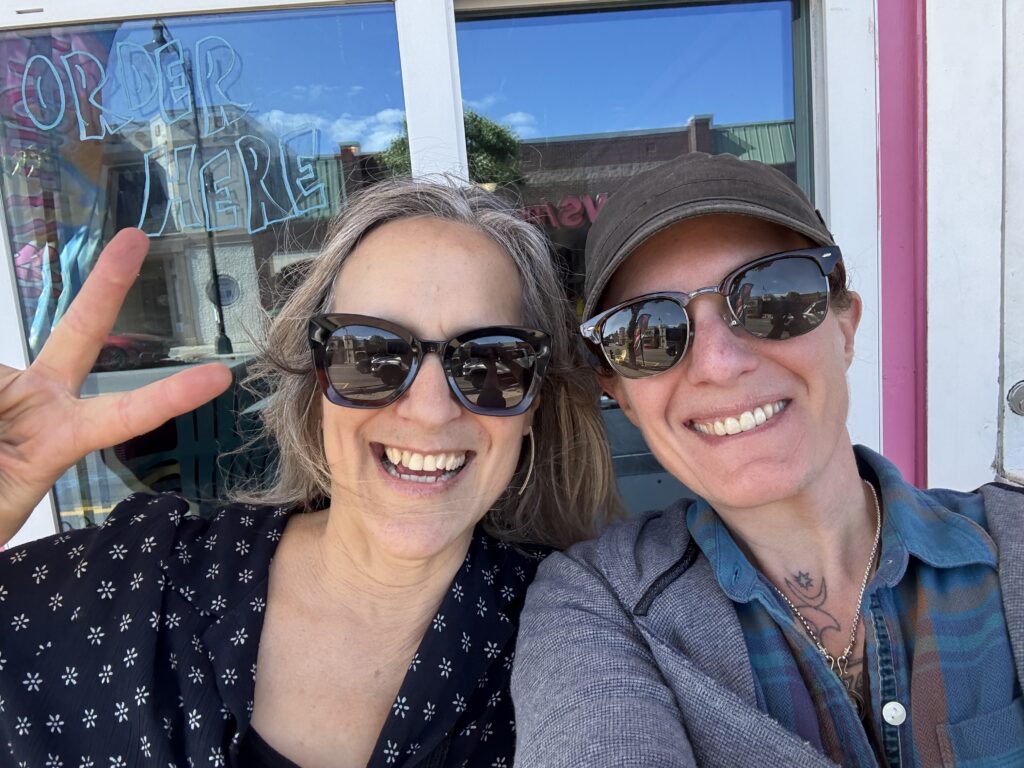
The following conversation is between co-director Julia Greenberg and Mad in America’s Mad in the World liaison, Karin Jervert, who first met while organizing a panel discussion for a screening of the Dory Previn film for Montclair Film. What began as a professional collaboration quickly evolved into a friendship and a shared appreciation for Dory Previn’s work and the insight and wisdom reflected in her life and art.
Karin: In true Dory fashion, I’m going to tell you the story of a voice and a visionary experience I had related to Dory. I thought it fitting to begin this conversation with one. You’re always game for discussing this stuff.
Julia: Dory would enjoy that. Exciting!
Karin: A few months after we met and after I screened your movie On My Way to Where, I walked down to the Raritan River. I have traveled to many rivers around the US and the world to reflect and integrate visions and voices. I stood on the muddy banks. It was a very low tide that day, and I dipped my finger into the water and wrote on a dry rock, “Duty is…” Shortly before I drew that question in water on that rock, in my mind, I heard Dory say to me:
“Only keep going if you think it’s your duty.”
So, I asked myself, “What is duty to me?” Then I watched the sun evaporate the words on the rock. What do you think “duty” is?
Julia: Really interesting question to think on in relation to my experience making this film. One way I think about duty in relation to the film is that in learning about Dory Previn’s voices and representing them in our film, it felt really important—like a duty—to portray what is usually referred to as her mental illness in a way that could encourage empowerment over discrimination. Because that’s how Dory represented her voices—terrifying and crippling at times, but the film really traces the arc of how she came to live with them.
Karin: Yes! Done with curiosity rather than fear, and approached with compassion for the diversity of the experience of consciousness, films like yours and many of those scheduled at the Mad in Norway International Film Festival are helping to increase understanding and, therefore, social justice in mental health. I feel, as an artist and activist myself, that this is a really important duty.
I can attest personally to how your film changed my life. Do you remember how I introduced myself to you as a “visions and voices gal” when I met you at the first screening of the film I saw at WFMU?
Julia: Well, it was kind of incredible when you got up and spoke so bravely and also with such humor about your voices after that screening.
Karin: I’ve gotten better at being open about it over the years! Before meeting you at that screening, my life had really been moving away from years of secrecy, shame, and isolation around it. I had a new partner who was a great ally, and I was adopting new ways of seeing my experiences, new ways of understanding healing, and new frameworks of hope to hold my experiences of voices and visions.
That night, your film became like a pebble on the path, reminding me that voice hearers like me could have happy endings, too. I remember being really emotional about the ending of the film. Dory Previn was happy!
Julia: Sometimes we get feedback about the film that we make Dory’s mental health journey “too easy.” And I think it’s a reasonable criticism, but it’s a result of a choice we made. We are filmmakers, and we took a storyline and pursued it to its end. But it’s a storyline that is crystal clear in Dory’s books and journals. She traverses the world from being terrified and institutionalized to stable, loved, and thriving, together with Mama, Max, and Lion, her voices. And she wrote about them on tens of thousands of pages, and those closest to her knew them as well.
Karin: To think her journey too easy perhaps discounts her great effort to live at peace with her voices, and I know how hard won that can be, but not just that—the fact that she shared that living with voices could be done, and that peace and ease could be accomplished, is everything. It can be hard, it really can, but I can’t see how it serves her profound inspiration to say it seemed too easy. She’s an elder in my mind, almost shamanic, really, a teacher who walked these tough roads and found a place to rest that she openly and generously shared with the world, and you, in turn, shared through your film.
Julia: I love thinking about her that way. Clearly, she felt compelled to be public and on record about her mental health, and I’ve got to believe she knew that it helped people, so the film simply amplifies her voice (or voices!)
Karin: Over many afternoons, meeting up in quintessential Jersey diners and coffee shops with you, (even ending up knocking on the door of her childhood home in Woodbridge, NJ together!) I told you about learning to thrive with my voices and visions, as I recovered from over-medication and psychiatric abuse.
I have struggled to feel like I belonged as I was, that voice hearers like me weren’t just broken things shoved in a societal junk drawer. But Dory has become someone very real to me, someone I truly started to walk with. When I say I started walking with her, I started to listen to her voice, to her music, learn more about her story, engage with her visions, and how she looked at life, how she thought about pain, trauma, music, poetry, and healing. Because of your respectful and clever filmmaking, I learned about her wild, complex, and profoundly inspiring life as a musician and lyricist from the ‘50s to the ‘70s. But what feels most important to me is how the film illuminates the humanity of someone labeled “broken” or “different.”
Julia: It’s extremely meaningful to hear this. I came to her through the music, but her mind really became the exploration in making the film. And I knew vaguely about the Mad Pride and Hearing Voices movements, but you have been our connector. When we have shown the film to voice hearers, the overwhelmingly positive and emotional response we get makes it really clear to me that there aren’t representations of women like her, like you, and like so many others in film. Or the representation is more fraught. I’m really excited to hear about the reaction to the film in Norway.
Karin: Yes, I’m not overstating it. Seeing Dory represented the way you did was a moment of change for me. To see yourself reflected on screen in a creative powerhouse like her is a moment of recognition: I do belong and can offer something to a world that felt a bit off-limits because of stigma and shame.
So, to wrap this up, I wanted to get back to the story I was telling in the beginning of our conversation about being at the river. The second time I wrote on the rock, I wrote, “Duty just is.” Duty clearly meant doing whatever I would do in the world authentically. It felt light and manageable; duty was just being. Sometimes we see duty as a heavy or conflicted thing.
Then I looked up at the sky and started to hear voices, like they were on a radio or TV. This man was speaking, that woman laughing, a few others chattering, distinct but getting less so as my eyes looked out into the sky, deeper into outer space. As my consciousness traveled farther towards the stars, all these voices started to merge into static. Everyone’s story, the auditory detritus of our lives, what mattered to us for this brief time we walked this earth, merged into a sound like white noise, like the space between stars that we still know so little about.
For that small moment, I felt just as insignificant yet beautiful, perfectly imperfect, as every other somebody on this planet. I felt like I belonged.
Julia: That’s wild, Karin! And so beautifully put. While my mind is not as attuned to the kinds of things you and Dory experience, I certainly feel the power of the imagery you just shared, and, of course, I feel it and respond to it really intensely in Dory’s music and writing. I wanted that to emerge in the film, in addition to the parts of her story that are about how misogyny, fame, and fear of women’s creative power relegate some artists to cult status (or how you have put it, “the societal junk drawer”), really robbing them and their amazing contributions from all of us.
But, as we always discuss on our meet-ups, I can relate to how Dory integrated her voices into her art, but I am not sure I really move past the idea that you talk about sometimes, that voice hearers, like Dory and you, hear each other’s thoughts, or hear the voices of the dead.
Karin: Yeah, we can’t know really, and I totally understand that. For me, at its core it boils down to how you describe connecting with Dory, being affected by her music, resonating with her spirit, in a way, just I think of that not being bound by time or biology.
I’m still so jealous you got to meet her!
Julia: One of the great honors of my life was to meet her, her wonderful husband Joby, and the rest of her family who have been so encouraging and gracious about the film.
Karin: I can imagine. I think what matters most in conversations like the ones we have is that we honor the unique meaning each of us has the right to make of the world and our experience of it. From day one, I felt your deep respect for that; that’s what makes your film so great. And that is a core concept at the foundation of Mad Pride.
Dory made sense of her experiences in her own way, and so do you, and so do I, and we respect each other for it. That’s what makes it all so interesting in the end: connecting with people who are different and asking questions like, “Was this vision real? Was it me communicating with some part of Dory’s spirit that remains? Or was it something else entirely? Who knows?”
We’ve even laughed before, saying that Dory might roll her eyes at us for having a conversation like this, because the answer may be something entirely different from what we’re used to—or even capable of imagining—yet. What matters most is that we hold each other’s meaning with respect, compassion, and honor.
Remember what Dory says when she was institutionalized, in response to an interviewer questioning if she really was mad?
Julia: Yes indeed. She said: “But what is madness? Madness is just another reality. That’s all. And who knows what the real reality is? …And the older I get, the more I realize, I really believe that matter, what I see and feel and touch, isn’t real at all. And what I can’t see, and what I can’t touch, you know, has tremendous reality to me.”
I love that line. And I’m willing to live in my reality while continuing to be fascinated by yours and Dory’s.
Karin: And that is just beautiful. So, putting aside whether or not you believe voice hearers can speak to the dead for a moment, what I do know without a doubt is that a film can be more than just a film, and art can change the world. That is perhaps easier to explain as an experience!
After all these years of being told not to believe my life could be easeful, or that I could live with voices, these days, (post-On My Way to Where and a thousand other films and friendships), I strongly believe I can do this weird thing of being a “voices and visions gal,” and I can help others like you did when you created this gorgeous movie about Dory Previn.
And like Dory did by being open and honest about how she experienced the world.
It gives me strength not only to be me but to continue making art. I trust what art can do for people. I trust it like I trust the rivers.
***
Mad in America hosts blogs by a diverse group of writers. These posts are designed to serve as a public forum for a discussion—broadly speaking—of psychiatry and its treatments. The opinions expressed are the writers’ own.
–
This post was originally published on Mad In America.
Trust this device for 30 days