
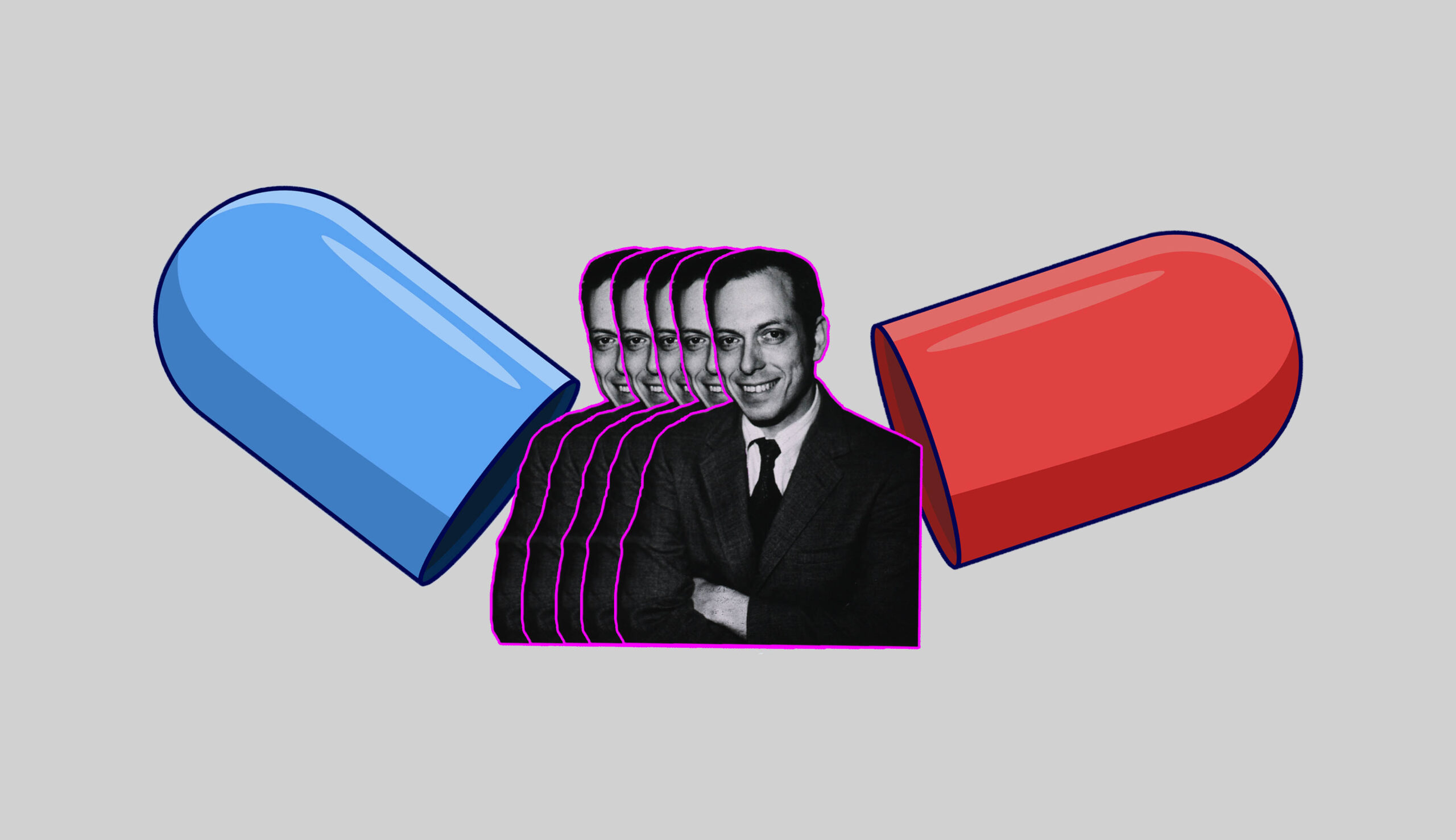

In the summer of 1973, my dad was diagnosed with paranoid schizophrenia. Schizophrenia is the technical term for what most of us call madness—a more or less total break from reality. I was two months old.
At the time, he was a lawyer for the Office of the Special Representative for Trade Negotiations under President Richard Nixon. He also wrote academic articles on international trade law. He had given a speech in Paris arguing that the government should make it harder for multinational corporations to merge, since mergers could hurt poor countries. Such restrictions were anathema to Nixon, who had run on a fiercely pro-business platform.
From the moment he returned from Paris, my father suspected he’d been placed on Nixon’s personal “shit list.” Whenever my dad picked up his phone, he heard a distinctive click, indicating that his phone was tapped. He started worrying that our whole apartment in the Van Ness neighborhood of Washington, DC, was bugged.
His fears weren’t unreasonable. Nixon was famous for surveilling his staff. But those fears soon spiraled out of control. My father became convinced my mother was a government spy. He thought the Washington Post was regularly reporting on his activities, coded in a series of articles about a marginal baseball player. He thought his doctor had secretly placed a recording device in his anus. He managed to keep a sense of humor about the whole thing. Whenever he farted, he would say, “Sorry, Chief.”
My mom and his parents begged him to see a psychiatrist. He eventually agreed, but only under one condition: He wouldn’t be given drugs. In college he’d read a book called The Divided Self by a maverick psychiatrist named R. D. Laing. Laing didn’t think that schizophrenia was a disease to be cured. He believed it was more like the start of a journey of transformation—a signal from the depths of the mind that something was seriously wrong with the world. Laing even called schizophrenia “a social adaptation to a dysfunctional society.” Working under Nixon, my dad must have thought society had gone perfectly insane.
He found a psychiatrist in the area, Thomas Lewis, who agreed not to give my dad drugs. I do not know what they talked about in their weekly sessions, which sometimes included my mom. But after my dad underwent several months of therapy, his sanity was restored. He later transitioned to the Labor Department, where he stayed until 1985.
***
In 1985, in the waning years of the Cold War with the Soviet Union and the looming threat of nuclear annihilation, my dad started having similar episodes again. Now his madness took a more cosmic turn. He thought intelligent beings were beaming thoughts into his head. He thought God was speaking to him directly, telling him to use his position to promote worldwide nuclear disarmament. Sometimes the French actress Catherine Deneuve joined God in my father’s mind, telepathically offering guidance, support, and love. When I was a teenager, the four of us would have conversations over coffee and cigarettes, to the point that the idea of multiple people living in a person’s head seemed perfectly normal to me.
He was given a different diagnosis, bipolar disorder, which involves a swing between colorful, intense, manic episodes and soul-crushing depression. When he wasn’t on his medications, he would get full of big, ambitious ideas. Sometimes his manic excitement would overflow into what the doctors called full-blown psychosis. God and Catherine Deneuve would return to the wheel. He once confided in me that even though he knew God and Catherine weren’t real, he enjoyed hearing the voices. They kept him company and gave him inspiration and ideas. (In 1986, one of his doctors diagnosed him with schizoaffective disorder, which has features of both schizophrenia and bipolar disorder.)
It wasn’t all fun and games. Sometimes the voices took things too far. Once, in the middle of the night, Catherine Deneuve played a joke on him. She told him she had flown from Paris to Washington, DC. She was tired of projecting her voice into his mind and wanted to see him in the flesh, to press her body against his, to make love to him. Now she was hiding somewhere in his apartment building. He jumped out of bed naked and started racing through the narrow corridors of his Dupont Circle apartment complex screaming, “Catherine! Catherine! Where are you?” She taunted, “I’m right here, John, around the corner.” That night ended with a hospitalization.
Another time, in the early 1990s when I was home from college, God began giving him splitting migraines. “I hate to do this to you, John,” God said. “This hurts Me more than it hurts you.” It was exactly what my grandfather would say to my dad when he was a little boy before striking him with a belt. That night, he sat on the floor holding his head in agony. He asked me to pray to God to stop his migraines. I put my hand on his head and earnestly asked God to stop hurting him. My prayers went unanswered. In the 1970s, psychiatrists like Thomas Lewis would have interpreted the God voice in terms of the trauma of the severe abuse and neglect my dad experienced as a boy. The goal of therapy would’ve been to help my dad understand that God and Catherine were mental constructs designed to help him navigate that trauma. Psychiatrists might have seen the voices as temporary way stations on the road to full healing.
But between 1973, when my father had his first break from reality, and 1985, when he had his second, psychiatry had undergone a massive paradigm shift. Some likened it to the Copernican revolution in physics. Schizophrenia was no longer the start of an inner journey of transformation or a signal from the depths of the soul. It was a brain disease that could be reversed or at least managed with pills.
In psychiatry’s new paradigm, nearly all mental disorders—chronic depression, crippling anxiety, hyperactivity in kids, mood swings, grandiose delusions, suicidal impulses—were symptoms of chemical imbalances in the brain. Psychiatry was starting to look just like the rest of medicine.
***
Starting in 1985, my father was often hospitalized against his will. In better times he’d end up at a private clinic, the Washington Hospital Center. In worse times he’d end up in the sprawling St. Elizabeths Hospital, a nearly two-hundred-acre campus of short redbrick buildings on the south side of the Anacostia River. This was the neighborhood that in the 1990s earned DC its moniker as “Murder Capital of the World.” John Hinkley Jr. ended up in St. Elizabeths shortly after trying to murder Ronald Reagan. I don’t know if my dad ever met him. Between 1985 and 1991, he spent over twenty-seven months behind its walls.
The doctors’ main goal at both facilities wasn’t to explore the roots of his strange ideas. It was to get him to keep taking his pills. The doctors called this “patient compliance.” But compliance was a problem for my dad. He didn’t like what the pills did to him.
True, they silenced the voices. His family and neighbors in Dupont Circle didn’t need to be afraid of his strange outbursts. But the drugs had terrible side effects. The first was a kind of mental fog or dullness. My dad, who’d graduated near the top of his class from Harvard Law School in 1967, wasn’t used to not being able to think clearly. The antipsychotic medications available at the time—drugs like Thorazine, Mellaril, and Haldol—dulled strange voices and ideas by dulling thinking. Sometimes I’d sit with him in his apartment in Dupont Circle as he drank cup after cup of coffee and chain-smoked to stave off the mental fog.
When the mental fog became unbearable, he ditched the pills. Within weeks, he’d be back on a new geopolitical adventure with God and Catherine Deneuve. He would be brimming with life and ideas and energy. During one of these, a former colleague of his at the Labor Department (my dad had lost his job and was now on disability) asked him to do some research on the problem of nuclear disarmament. Within a day, my dad sent him a ten-page, single-spaced manifesto. “How did you do all that research so quickly?” I asked. “God dictated it to me,” he said proudly. An Oxford psychologist named Louise Isham recently told me that delusions often give people a deep sense of purpose, meaning, and significance in life. That was definitely true for my dad.
The pills started to dull not only his thinking but his movement. I discovered only much later that movement disorders are a well-known side effect of the antipsychotic drugs that were prescribed at the time. They made some people very fidgety and restless. They made others very still, with faces like expressionless masks. My dad was in the latter camp. It took me years to understand why he looked so somber in all of the pictures we took with him in the 1990s. The particular combination of drugs he was on, lithium and Mellaril, are now known to be neurotoxic. There are still no pills that manage schizophrenia with little to no side effects.
By the mid-1990s, my dad started losing his capacity for fine motor control. It would take him a long time to put on his shoe or pull a few dollars out of his wallet to buy a pack of cigarettes. Over time, his gross motor control began to fail too. He would walk slowly and with great effort down Connecticut Avenue to Kramerbooks for an espresso. Walking for longer distances, like in an airport, was impossible, and I’d need to push him in a wheelchair. But the voices were gone. His doctors considered his treatment a success.
Around 2000, the drugs began preventing him from swallowing normally. His brain was unable to regulate his epiglottis, the thin strip of tissue that prevents liquids from going into the lungs. This might have been what doctors now call antipsychotic-induced dysphagia. If he drank a cup of water, some would go down his trachea and into his lungs and he’d get pneumonia. I’d have to mix a powder into his liquids that turned them into a thick paste so it wouldn’t go down his trachea. He hated drinking it, so he would drink water directly from the sink. He would often cough up a brown putrid mess in his sleep. After several bouts of pneumonia, he died on April 1, 2005, at the age of sixty-six. That same month, the US Food and Drug Administration forced manufacturers of newer antipsychotics to list dysphagia as a side effect. (In 2008, they extended that warning to all antipsychotic drugs.) But Mellaril was yanked from the world market two months later for causing heart problems.
The first rule of Western medicine, going back to the ancient Greeks, has always been that the cure shouldn’t be worse than the disease. I often wondered if that was true for my dad.
***
My dad’s changing treatment, from talk therapy to pills, was shaped by a paradigm shift in psychiatry in the 1970s and early 1980s. Back in the 1960s, many doctors didn’t think of psychiatry as a branch of medicine at all. They thought that, unlike cardiology or urology, it wasn’t based on real science. It was either unhinged speculation about patients’ deep psychological conflicts or dangerous experiments on them, like lobotomies and insulin comas. But by the late 1990s, when I started graduate school, psychiatry was considered a respectable branch of medicine, based on cutting-edge brain science and genetics. How did psychiatry go from being medicine’s ugly stepchild to a respectable branch of medicine?
Psychiatry’s biological revolution had many causes. Some of the push came from asylum doctors who were frustrated with the limits of talk therapy. They also wanted the professional respect that other doctors had. Another part of the push came from an emerging pharmaceutical industry desperate to sell pills. They were eager for a new blockbuster drug like Valium and Miltown. The idea that mental-health challenges came from chemical imbalances in the brain was a lucrative proposition. A third push came from patients themselves and their families. They were tired of being told that their problems came from infantile conflicts, childhood trauma, or bad parenting.
But the most forceful push came from science itself, from the actual scientific discoveries that were rocking the field and the way scientists were making sense of those discoveries.
One scientific paper in particular had an outsize influence on this paradigm shift.
It appeared in 1976 in the American Journal of Psychiatry, one of the world’s leading psychiatry journals. It was titled simply “The Dopamine Hypothesis of Schizophrenia.” The author of the paper presented numerous lines of evidence to support a radical theory. He proposed that schizophrenia wasn’t based on unconscious conflicts. It came from having too much of a chemical called dopamine in the brain. You could call it the too-much-dopamine theory of schizophrenia.
The paper was written by a young American psychiatrist and neuroscientist named Solomon Halbert Snyder, Sol to his friends and colleagues at Johns Hopkins University in Baltimore. Sol was a wunderkind who graduated high school at sixteen and started medical school at nineteen. By twenty-one, he’d published not only scientific papers on how the body breaks down an amino acid called histidine but a philosophical treatise on schizophrenia that tried to reconcile biological and Freudian perspectives. By twenty-five, he’d been taught state-of-the-art methods of brain research by the Nobel laureate Julius Axelrod. He even helped discover that a hormone called melatonin regulates the sleep-wake cycle. At thirty-one, he became the youngest full professor in Johns Hopkins’s history.
Two years later, in 1972, he and a graduate student named Candace Pert identified the brain’s opiate receptors, the specific proteins in the brain that are sensitive to heroin and other opiates. This helped birth the modern science of drug-addiction treatment. It also brought him the Lasker Award, North America’s highest scientific honor, often considered a stepping stone to the Nobel Prize. In 1975, at the age of thirty-six, Sol identified the brain’s dopamine receptor. Sol’s identification of the dopamine receptor became a cornerstone of the contemporary science of mind and brain. Scientists are still uncovering the full range of dopamine’s functions. Our current theory is that dopamine’s main job is to signal to the brain that something unexpectedly pleasurable has happened and reinforce the actions that led to that reward. For that reason, dopamine plays a major role in why people get addicted to drugs, or sex, or social media scrolling. There’s a whole industry that teaches people how to take a “dopamine detox.”
Sol also proved conclusively that all the traditional antipsychotic drugs, like the ones my dad was on, worked in the same way: They disabled dopamine receptors. Shutting down dopamine receptors silences weird voices and beliefs. But it also causes movement disorders, since dopamine is necessary for normal movement. Sol hoped that once scientists knew what caused schizophrenia, they could make a better drug, one that would treat its symptoms without causing side effects. His discovery played a role in the resurgence in the 1990s of a powerful antipsychotic drug called clozapine, which is far less likely to cause movement disorders.
Sol’s paper “The Dopamine Hypothesis of Schizophrenia” began quite modestly, given the influence it would come to have. “The dopamine hypothesis of schizophrenia,” Sol wrote, “is by definition supported by no direct evidence. No one has found anything conclusively abnormal about dopamine in body fluids or brains of schizophrenics, but the indirect evidence is impressive.”
Almost immediately, Sol’s dopamine hypothesis became a poster child for psychiatry’s medical revolution. It inspired a generation of researchers to part ways with psychoanalysis and look for the biological basis of schizophrenia and other mental disorders. It became a template for other chemical-imbalance theories: The serotonin theory of depression. The lithium theory of bipolar disorder. The noradrenaline theory of ADHD. Sol promoted all of these views. He even played a role in the invention of Prozac. As Peter Kramer wrote in his 1994 bestseller Listening to Prozac, “Most major developments in American biological psychiatry relied to some degree on an element of Snyder’s work.”
Sol’s paper didn’t start psychiatry’s medical revolution. A growing number of psychiatrists in the 1950s and 1960s were disillusioned with talk therapy and wanted to put psychiatry on a solid scientific footing. In the 1950s, psychiatrists Heinz Lehmann in Canada, Nathan Kline in America, and Roland Kuhn in Switzerland, among others, vigorously promoted the use of drugs in treating psychiatric disorders and the underlying biological concept of mental illness. In 1957, British biochemist Kathleen Montagu identified dopamine as a neurotransmitter, and in 1963, Swedish neuroscientist Arvid Carlsson expanded on Montagu’s discovery, hinting at a link between dopamine and schizophrenia. In the mid-1960s, British psychiatrist Alec Coppen and American psychiatrist Joseph Schildkraut argued that depression might arise from abnormalities in neurotransmitters such as serotonin and noradrenaline.
But concrete evidence for the biological view remained frustratingly elusive. Even in the early 1970s, nobody knew for sure how antipsychotic and antidepressant drugs worked. The interactions between molecules of the drug Thorazine and dopamine receptors on brain cells take place at the nanoscale (a nanometer is a billionth of a meter). Since scientists were unable to observe events at that scale, the biological approach to psychiatry remained a hypothesis to be considered alongside the mainstream psychoanalytic approach that sought the roots of madness in childhood trauma and unconscious conflicts.
In the 1970s, biological psychiatrists desperately needed a win. Sol’s too-much-dopamine theory and the evidence he acquired for it gave them that win, helping to transform their approach from a speculative paradigm to a biological reality.
Sol didn’t just accelerate psychiatry’s biological revolution. He also became one of its most vigorous advocates. In addition to his scientific articles—of which he wrote over a thousand—he also wrote popular books, among them Madness and the Brain, The Troubled Mind, and Biological Aspects of Mental Disorder. In 1986 he wrote a large, beautifully illustrated coffee-table book for Scientific American Library called Drugs and the Brain, one of a trio of books that pushed psychiatry’s biological revolution into broad public awareness. In the early 1980s, Sol even started a pharmaceutical company so he could more effectively design medications that targeted mental illness. Although his Nova Pharmaceuticals didn’t make any breakthrough drugs, it did make him very rich. He gave millions of dollars anonymously to Johns Hopkins’s neuroscience department. Today it is called the Solomon H. Snyder School of Neuroscience. By some measures, such as the d-index (which ranks scientists in each discipline by their publication history and citations), Sol is the most influential living neuroscientist in the world. Yet he is almost unknown outside of scientific circles.
Sol Snyder was instrumental not only in turning psychiatry into a science but in burning this medical vision so deeply into our collective consciousness that it’s almost impossible to see outside of it.
****
From The Madness Pill: One Doctor’s Quest to Understand Schizophrenia by Justin Garson. Copyright © 2026 by the author and reprinted by permission of St. Martin’s Publishing Group.