
Welcome to the Mad in America podcast. My name is Brooke Siem, and I am the author of the award-winning memoir on antidepressant withdrawal, May Cause Side Effects.
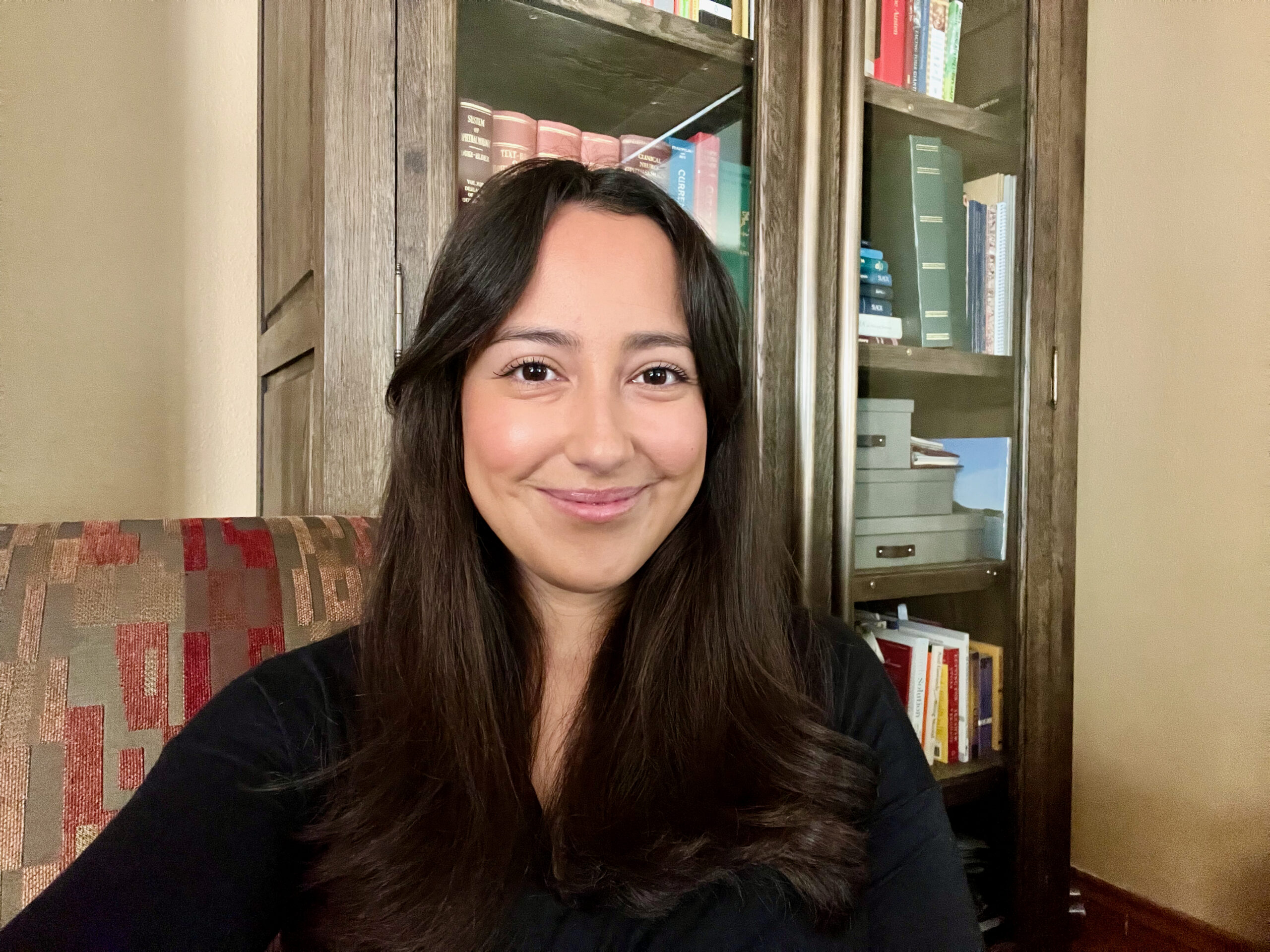
Today, I’m with Carla Delgado. Carla is a San Diego native with eight years of experience in healthcare and a master’s in healthcare administration. She also has a personal story with SSRI withdrawal, and I really wanted to speak with her because of her unique background in healthcare administration and helping to navigate the system, which has not been that friendly for folks in withdrawal.
The transcript below has been edited for length and clarity. Listen to the audio of the interview here.
Carla Delgado: Thank you so much, Brooke, for the opportunity to share about my experience, and I hope that I will be able to help at least one person as they navigate their own journey.
Delgado: I was first prescribed an SSRI back in 2020, and of course that was when we were going through the pandemic, and so a mix of things were going on in my personal life and in the world at the time.
My primary care physician felt that it would be good for me to start an antidepressant, but I was very hesitant. I waited around three months before even starting it. Once I started, I could not have expected the journey that I was going to go on being on the medication for as long as I have been, and then my attempts to come off and it not going well. There were other layers to my story as far as job loss, going through insurance hurdles and not having access to the care that I thought I would have while trying to come off a medication I no longer needed to be on.
Navigating the system and believing that the system would be there to help me during a time of crisis, I was able to see the crux as I tried to get help. That enlightened me as to what people must go through while they try to seek the help that is absolutely necessary when trying to come off a prescribed medication.
Not having those resources, I actually needed to find resources elsewhere, and so my sister sent me a reel on Instagram of someone who was going through this experience. That validated what I was going through because nobody else could really answer what was going on with me.
Seeing that reel and that personal experience, it made me feel seen in a way that I hadn’t felt seen by the system or by the providers I sought care from, and it changed the narrative that I had received that you can come off this medication easily. You’ve just got to titrate over a short time period, and you can easily switch from one to another, no problem.
But I think that’s from a lack of information. It’s easy to say that, coming from a provider perspective, not personally having been on the medication, it’s another thing when you’re going through it yourself, and your experience is vastly different from what you’ve been told.
Delgado: I was on venlafaxine, but it wasn’t my first prescription. I was prescribed escitalopram at first, but had a negative reaction to that, and so I was promptly switched to a different medication and stuck through that initial two-week period where you need to go through all the side effects. That completely flipped my world as well because it was not only insomnia, but daytime sleepiness, and just being overall uncomfortable while starting the medication. There are four to six weeks that you push through all those side effects until you start feeling a difference.
I pushed through, but I will say, looking back, would I have pushed through knowing what I know now? I probably would not have. I definitely think there was a lack of informed consent, particularly as to the side effects that are possible when you try to come off the meds.
There was never a long-term plan as to how long I would be on it or any follow-ups to see whether it would be time to perhaps work on a management plan. I think I was lost in the COVID world, and there were a lot of constraints from the system itself. It’s six years later, and I’m still on this med, no follow-up, no plan still, only my own personal journey. I didn’t sign up to be on the drugs forever when I started them, but here I am already six years down the road, having already attempted to come off with my own knowledge and research as to how others have done it.
I’m now having to come up with my own plan that is safer for me than one that was communicated by a primary care physician. I think that also speaks to a lack of knowledge of how they work, the dependency that it creates within your body and your brain, and also just the lack of using lived experience versus what the trials have shown us.
Delgado: There’s so much more to be said about lived experience than a trial, and while trials do have their purpose, they don’t establish causation. There’s that piece of correlation, but not necessarily causation. I think we know our bodies, and we know what we’re living through, and a lot of times the data may speak against that. I think if you’re going through something personally, there’s a lot of information in that.
Delgado: So, I didn’t realize the cracks until I tried to come off the medication myself. During the time that I was on it, I had done my own research as to what it takes to come off. What have other forums shared as to patients who’ve come off and been successful? I saw some patients say that they had tried to come off this med by slowly reducing the dose by beads. Seeing that helped inform me as far as, okay, I’m going to personally try to lower my dose by counting out the beads, so I came up with my own reduction plan.
I felt like I had done enough research, and so I was like, okay, I’m going to do this. So I came up with my own plan. I was on 75 milligrams, and so I thought, I’ll do a dose reduction to 57 milligrams, and see how I handle that, and so I did, and then I stayed on that dose for about a year.
After I had gotten to a new baseline, I then reduced from 57 to 37.5, which is the half dose and is available in capsule form. I did that and held that for the next two years, so I felt, okay, great, I made it now to the lowest dose available. I thought that because it was the lowest dose, I would be in the clear. I did not realize that I would essentially be pushing myself off a cliff.
In December of 2024, I was unfortunately laid off from my role, and it wasn’t something that I had planned for, so I now had to navigate not having access to healthcare. There are COBRA options when you lose your job that allow you to continue your healthcare coverage. There’s also a plan that you can find through Covered California, which is the insurance marketplace for individual plans when you do not have access to employer-sponsored healthcare.
I was good for probably a period of around three weeks, but then I started experiencing some mood changes. There were the initial acute side effects, which included discomfort, bloating, and not really wanting to eat as much. With that also came the emotional side effects of moments where I was fine, and then the next moment there would be some darkness, or I would start feeling panic coming on. This was weird because I thought, okay, these past few years I haven’t experienced that, but now all of a sudden I’m experiencing all these changes, and they’re pretty sudden.
A friend of mine noted some affect changes too, and I had shared with her that I was coming off the medication. That also highlighted that something’s different, something’s changing, and I wasn’t aware of what was going on at the time. I thought, okay, I’ll just push through, just keep my routine as normal, and everything will be fine.
But then I was suddenly forced to leave a new position I had found, and so that forced me into another crisis of, okay, now I no longer have my role. I now no longer have access to health insurance that I thought I had. I applied for an individual insurance plan through the marketplace, and so I was able to get a personal plan, but now I needed to navigate care through a new system because I was in an emotional mess. I was having breakdowns. I was feeling really anxious and panicky. I was also super concerned about what I was going to do next, and so I sought care, but with this new health plan, they saw me as a totally new patient. They thought I was coming in for the first time.
I also sought an appointment with a primary care provider who was a nurse practitioner and was promptly berated for trying to come off a medication, which also added a negative layer to my experience because here I was seeking care and then was being told by a provider, Why did you do that? You’re not the only one going through hard things.
That bedside manner or lack thereof also showed me there’s still a lot of stigma and a lot to be done when it comes to treating patients with care and empathy when going through experiences that are as traumatic as this one. That left me discouraged as well because I was able to access care, but then the moment I needed the care, the provider was not helpful. That added to my hesitancy to reinstate a medication that was now causing all these side effects.
I was very hesitant to restart the medication because I thought that’s what put me in this position in the first place. Why would I want to reinstate something that has now caused me all of this strife that I was not prepared for due to the lack of informed consent? Thankfully, at that time, a neighbor happened to be a psychiatry resident, and they came and sat with me for three hours to talk about my background, the medication I had been on, and what the next appropriate plan of action was. They did not need to do that; they were not required to, but I felt so much more empathy and care in the time that they took to sit with me and talk through my options. And that prompted me to then reinstate the medication.
Delgado: It took me about three months to work my way back up to 75 milligrams. I’ve held on that dose for the past eight months, and it did take some time, because there were initial shocks of my body not having the medication it’d become physically dependent on. Then, I also learned to trust my body again during this whole experience, because I felt like I didn’t know my body anymore. My nervous system had been negatively affected by such a huge jump off a dose that I thought was the lowest one. I now know hyperbolic tapering is the way to go, so that you are slowly adjusting your body to any changes. I’ve held on to that, and I still hope for a future where I can come off the med. I know there are a lot of unknowns with that, but I do have hope that I will be successful once I feel ready to conquer that mountain again.
Delgado: From a system standpoint, I knew how to continue my insurance plans. So there was that one piece of knowing: okay, my option is COBRA, or my option is to go through the insurance marketplace. So I ensured that I always had insurance through all of this. I can’t imagine what it would have been like to not have it because I was able to seek follow-up care. While that care perhaps was not appropriate for my situation or what I felt was helpful, I still was able to access it. I think there’s that piece that you can still decide for yourself, despite the recommendations from medical professionals, what is appropriate for you.
I think the systemic piece, the crux, though, was the lack of interoperability. Perhaps it would have been helpful if they had access to my medical records from my previous provider, who I’d been with for several years. Perhaps that would have helped inform some things such as tackling me as a new patient to them, but not new to healthcare, not new to what I was going through necessarily.
Delgado: No. I did not give them my records because I felt very jaded at that point. Having worked in healthcare for as long as I had, but not needing or not finding the care that I felt I needed at that time, I was more hesitant to seek further care. I became afraid of the system itself, which I’ve personally sought to improve. We talk about access, we talk about timely care, the right care at the right time, and then it didn’t happen.
Delgado: I had, and then I felt very lost. From my perspective now, I see it as an opportunity to continue that fight because somebody has to do it. If it’s me who has that personal patient perspective, it only just lights a fire even more under my desire to help improve these access and interoperability issues that we have in our system because it’s so siloed. I do hope for a future where we can arrive there. There’s still a long way for us to go, and there are so many layers to the system, but even having patient navigators or people who are coming alongside to help patients who are going through this, maybe that would be a step in the right direction.
Delgado: No. Here’s the thing. I still do not have a provider. Going through many job changes while going through this is not ideal, but for some reason, it happened to me. I started a new role, thought I’d found insurance, and then, for my own reasons, decided to leave that role. That also left me with COBRA. I decided to keep with that until I found my next role, which thankfully I just started a few months ago. I feel like I finally found stability in the workplace, so I will be able to access the care that I need. It’s been a year that I have not been able to find consistent care due to the insurance changes, role changes and relocating due to those changes.
Delgado: During the time that I was going through withdrawal, through the research and the conversations and podcasts that I was able to listen to, I became more informed. When I went to the psychiatric nurse practitioner, a secondary one who wanted to prescribe Abilify, I was able to ask questions that helped me assess for myself that it wasn’t the right choice for me. I asked about what the side effects were, and they were unable to answer my questions.
Delgado: They compared it to Advil, and I thought, you cannot compare Advil to a psychotropic medication that affects the brain. That also told me, okay, I don’t feel comfortable with this. Then I asked, okay, what’s the plan to eventually come off of it? They said they would have to get back to me. The inability to answer my questions in the moment did not make me feel confident that they were well-informed or had the experience to provide a recommendation.
Delgado: Yes, how do they interact? That was another question I asked because you want to be mindful of the interactions between medications, and I know there are certain meds that I can’t take because of the one that I’m currently on. I’ve always been mindful of that, and I’ve asked every time. But just the inability to answer those questions clearly did not give me the confidence to move forward.
Delgado: Yes, and if you don’t know what to ask, it’s very easy to just trust what they’re telling you. But then, with the knowledge that I had, I knew the appropriate questions to ask that would give me an indicator of whether they had the knowledge and experience that I was looking for, and unfortunately, they came short.
Delgado: That’s a layered question because, with my knowledge of the system that we operate in, there are many moving pieces that would have to shift in order for us to move in that direction. I think there’s also a huge cultural piece here that we’re a very individualistic society, whereas other collectivist societies have been able to tackle this issue by really rallying around patients going through adverse experiences in regard to psychotropic or psychiatric medications. I think if we were to implement similar models to those adjacent to and in partnership with the current system, perhaps that would be the way that we can start to address these gaps and inequities in addressing care.
Delgado: I have definitely seen more programs focused on helping patients, particularly in behavioral health. There is one in Orange County that I’m aware of, which focuses on well-being. So instead of going to an Emergency Department (ED), you would present to this center instead, which I think is less of a barrier to care than one you would probably find trying to access care via the ED. So if you’re going through a crisis, I think typically you would either call 911 or present to a hospital, where you may find you will wait for a very long time to access the care, versus if you have access to a psychiatric crisis center, they’re able to see you right away.
That timely intervention and care, I think, is very important. I do see a lot more conversations on focusing on the need to pull back the veil that has been pulled over our eyes in regard to what patients are actually going through.
The more that we’re able to share those stories and advocate for reform, then the more we’re moving in the right direction. There’s still a lot to do. I hope that by being a personal advocate for it, I can also start to help move the needle.
Delgado: I think there’s definitely still a lot of hope. There were moments where I didn’t think there were, but thankfully, family and friends who were supportive helped me feel that I wasn’t alone. Also, seeing the stories that were shared about people going through the same experience helped bring that sense of community in a time when those of us who have gone through it know how isolating it can feel. Knowing that there are so many others in the world who have also gone through that experience just brings us together.
In some ways, while my nervous system was sensitized due to trying to come off the medication, I saw it as an opportunity to work with my nervous system in the sense that there were still traumas and emotions that I thought I had worked through while being on the med that came up as if I had not done a day in therapy. I almost had to address those as older me talking to the inner child in there that was still hurting and had gone through experiences, so I had to approach it from a totally different perspective. I think coming home during that time also helped me achieve that. There are people there who understand what you’re going through and who want to help, and it’s always important to ask for help, and it’s okay to need help.
***
MIA Reports are supported by a grant from Open Excellence and by donations from MIA readers. To donate, visit: https://www.
–
This post was originally published on Mad In America.
Trust this device for 30 days