A federally funded project aimed at tracking toxic PFAS “forever chemicals” in the air near a North Carolina chemical plant remains active, the Environmental Protection Agency confirmed Monday, after weeks of uncertainty about the future of the research.
The $800,000
EPA grant, awarded in 2022 to the University of North Carolina at Chapel Hill, supports the development of real-time methods to detect airborne PFAS around the Chemours Fayetteville Works facility — a plant long tied to widespread contamination in the Cape Fear River Basin.
UNC researchers had received conflicting communications this spring suggesting the grant was canceled, prompting concern among scientists and community members about the potential loss of critical environmental data.
Mike Watters, a longtime Gray’s Creek resident and neighbor of the Chemours site, said he learned of the pause on May 8.
“They were doing real-time collection of PFAS data, based off which way the winds were blowing,” Watters said. “Luckily, we got all of the field data collected before they killed the funding.”
On Monday, an EPA spokesperson told WRAL News:
“EPA grant R840431 awarded to the University of North Carolina is an active grant and funds remain available to the recipient.”
PFAS, or per- and polyfluoroalkyl substances, are a class of synthetic compounds used in products like nonstick cookware, stain-resistant fabrics, and firefighting foams. Often called “forever chemicals” because they don’t break down easily, PFAS have been linked to health effects including liver damage, immune suppression, reproductive issues and certain cancers.
Jason Surratt, an atmospheric chemist and principal investigator on the project, said his team partnered with Texas A&M University to collect air samples around Chemours over a six-week span earlier this year.
“We didn’t detect GenX during our January and February fieldwork, which is encouraging,” Surratt said. “But we did [detect] other PFAS compounds in the air around the plant.”
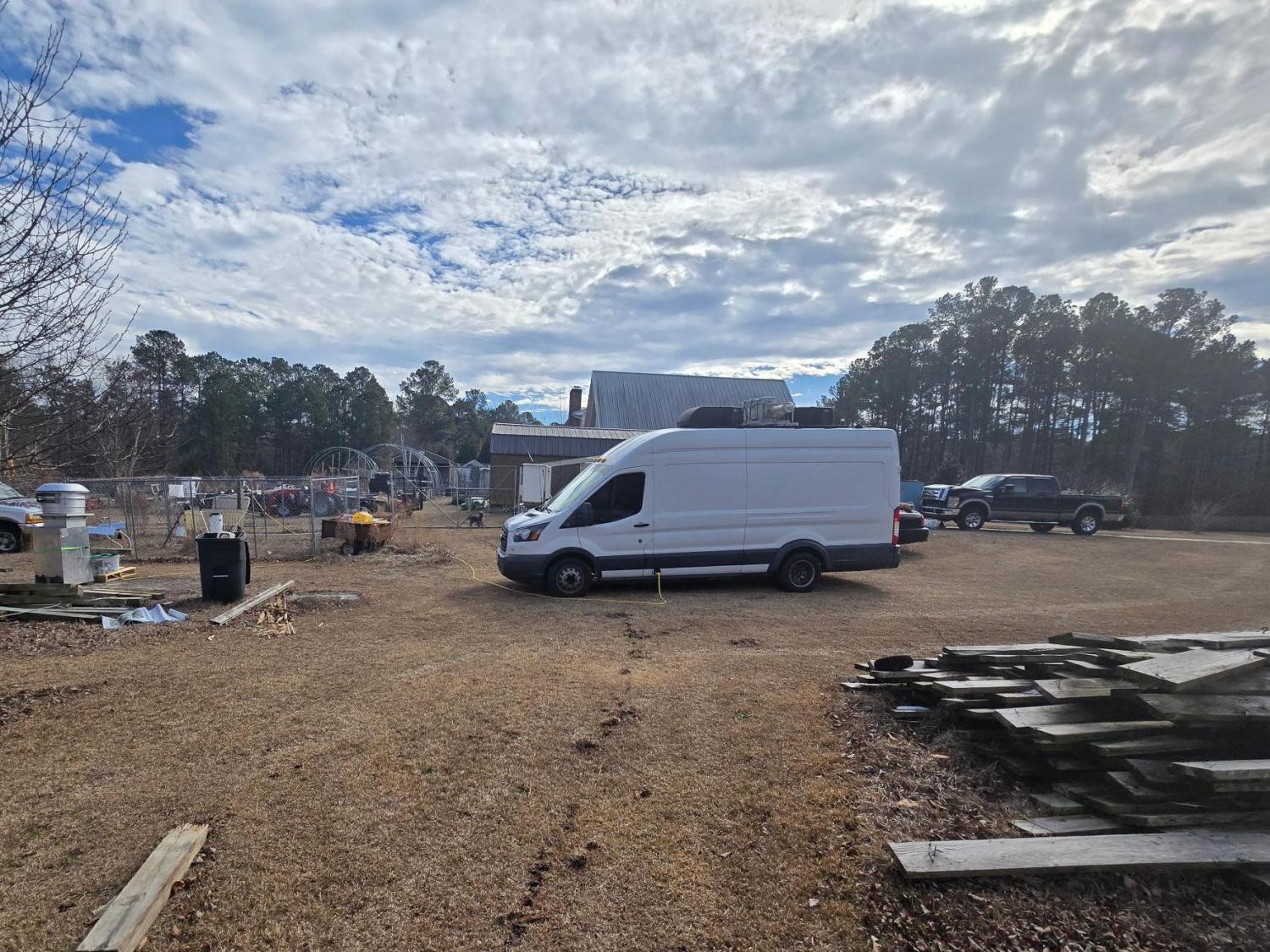
The research used a mobile lab van outfitted with high-resolution mass spectrometry to detect airborne PFAS in real time, a capability Surratt says is vital for understanding how the chemicals move and transform in the environment.
“What makes this research important is that we’re developing methods to actually see PFAS in the air as it’s happening, second by second,” he said.
Watters, who hosted one of the monitoring vans on his property, has been diagnosed with multiple serious health conditions, including polycythemia vera, a rare blood cancer. He said blood tests revealed PFAS levels in his body of 29,000 parts per trillion.
“I don’t trust a word Chemours says,” Watters said. “When I see 90 at my property and I’m not even in the wind cone, that’s alarming.”
While Chemours says a thermal oxidizer installed in 2019 has reduced emissions by more than 99%, researchers say so-called fugitive emissions may still be escaping from storage tanks or equipment leaks.
Surratt’s team is now analyzing samples in the lab and studying what happens when airborne PFAS compounds are inhaled, research that could shape future health and regulatory decisions, if funds continue.
UNC’s Office of Sponsored Programs did not immediately respond to requests for comment. The EPA also did not answer follow-up questions about the pause.